Treating Founder (Chronic Laminitis) without Horseshoes
(Scroll down for Table of Contents)
(Click on small thumbnail photos to see larger versions.)
|
Spring Founder Prevention We're coming to that time of year again when so many horse owners feel pressure to have their vets out to do spring shots, tube worming, sheath cleaning and floating...all on the same day. It's what most horse owners do, and what many boarding barns require. It's also safer to do this in summer or winter, rather than spring or fall, when laminitis is more common. Another precaution: the sudden change of diet from all-hay, to all-new-grass, can trigger laminitis. It is safer to make sure horses are still eating some hay every day in the spring. It may be tempting to economize on hay and just turn them out when the fields green up, but it's not worth the risk. The new spring grass is lower in minerals and higher in sugar. Supplementing with magnesium can also be helpful. One sign a horse is eating all new grass and no hay is a sudden reduction in water consumption, due to the high moisture content in the new grass. If a horse with access to a lot of grass is suddenly going from drinking 5-10 gallons of water a day, down to 1 gallon a day, this is not a good sign. First aid in a nutshell, if your horse does founder: |
|
The basis of this approach is to have hoof form that mimics the shape of the underlying structure, which means having a fairly uniform thickness of horn covering it, and a ground-parallel coffin bone bottom. This reduces leverage on the wall connection, and does not over-stress the connection in the toe area, which high-heeled hoof form results in. The approach is also based on hoof form that enables good circulation in the hoof, which is important to healing, and growing down a new, stronger laminar connection. You cannot stick a torn laminar connection back together; a new connection will have to grow down. Dr. Christopher Pollitt's video on "Equine Foot Studies" makes clear why many orthopedic shoeing options that offer so much frog support that the coffin bone is nearly immobilized will fail in the long run because they reduce circulation. Link to view this video is at https://www.facebook.com/alHHHC/videos/equine-foot-studies-by-prof-c-pollitt/846776945485820/ Pollitt shows x-ray videos of cadaver hooves being weighted and unweighted to show circulation with good barefoot hoof form, and various shoeing options. He shows how too much frog support and resulting coffin bone immobilization reduces circulation in the hoof. This prevents optimum healing. I once had a long-time farrier tell me that heartbars "quit working" after a while, although he didn't spell it out as to why. I think what he observed was the result of reduced circulation from immobilizing the coffin and reducing heel expansion on weight bearing explains what he saw over the years. |
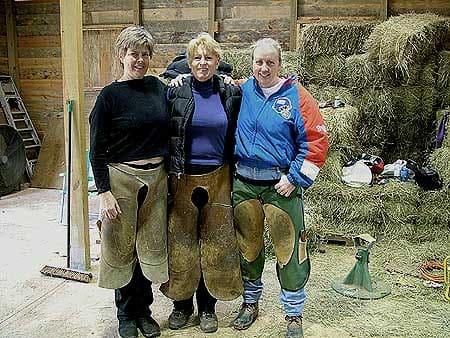
I am very sorry to have to say that Anne "Tree" Coley passed away of pneumonia January 6, 2014. She merely thought she had a bad case of the flu, and did not get to the hospital soon enough.
Marilyn Gilligan, Nancy Filbert, and Anne "Tree" Coley
at a clinic Risa Couch hosted in 2006.
She was a tireless advocate for horses and barefoot trimming, and helped many people online, in addition to working on many horses. I have a page on one of her more challenging cases HERE. She was a good friend to both horses and their people. She was fun to be with, kind, and had a very practical approach to solving problems. It will always such a pleasure to talk with her. She will be sorely missed! Tributes have been pouring in for her on the naturalhorsetrim list and her facebook page.
A memorial service is planned for Anne on Saturday, Feb.1, at 2:00 pm at Mount Moriah Calvert Church, 928 Calvert Rd., Brevard, NC. Everyone is invited to attend.
I am very sorry to announce that Nancy Filbert passed away suddenly and unexpectedly in her home. A friend found her dead in her home on April 1, 2019.
I first introduced her to Sabine Kells when she was dealing with a foundered horse, and Nancy took the Strasser course and really ran with it. It was a real turning point for her because it gave her the tools to save many horses with better barefoot trimming that she hadn't had before. She had spent her life caring for all kinds of animals. No animal was beneath her notice and care. She also taught many more people about how to help horses with better barefoot trimming, and put on a number of clinics. When I visited, there were so many rescued dogs, cats, and birds in her house, peacefully resting everywhere, especially on furniture near the wood burner. It was a cozy home, warmed by the presence of so many animals who were secure in the knowledge that they were, at last, loved and cared for. She saved the lives of so many horses. I was honored to know her and be her friend. This is a great loss to the horses she helped, and to her many friends. She had a big heart, and she was such fun to be with. She will be missed.
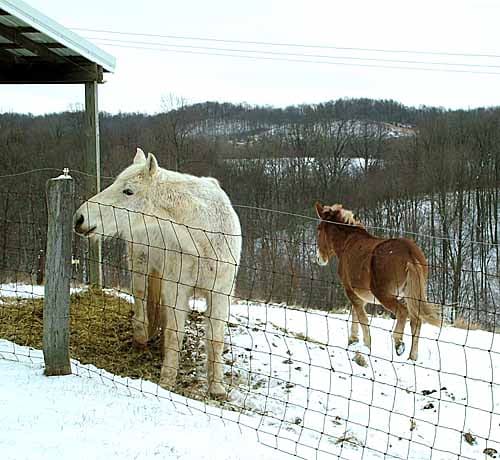

My last photos of Max...early 2004
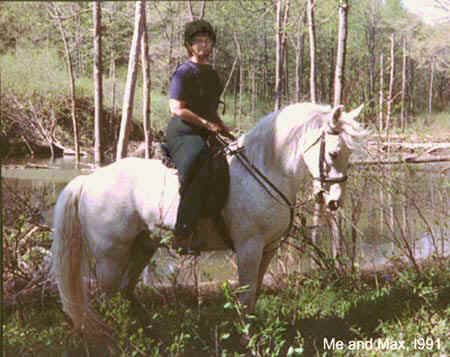

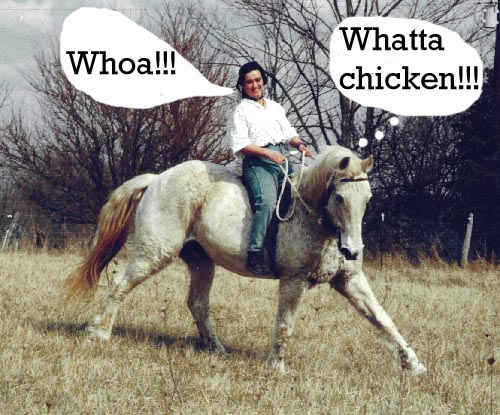
Me and Max back in sunnier days in 1991,
and a friend on Max, aged 25, after he recovered from founder
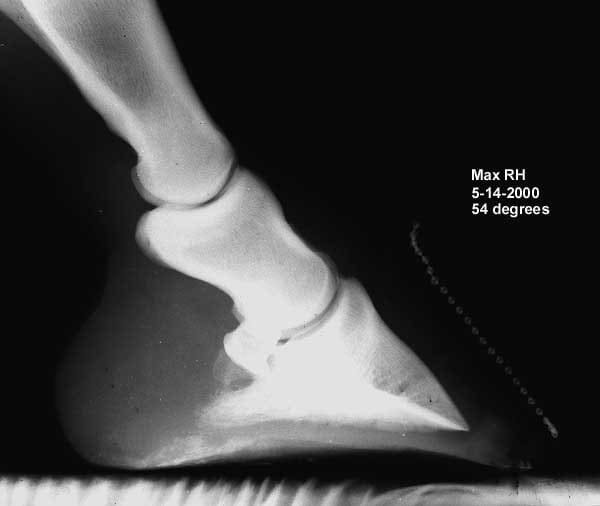
Sadly, I have to report that my old foundered horse, Max, died March 23, 2004. It was sudden, and while I was away. He was 30 years old, born June 10, 1973. Even a couple of days before, he seemed fine. He was still feisty enough to push my draft mule around. At the time of his death, he was bleeding heavily out of his nose and mouth, and collapsed. The neighbors buried him with their backhoe before I got home, so I never did have a chance to have a necropsy done to know for sure the cause of his death...or to even say goodbye. His teeth were not good, and he was starting to have trouble keeping weight on. But he survived more than 10 years after having sole penetration...his soles just filled back in and stayed that way. He has been such a good friend for so long, it is almost inconceivable that he is gone. Foundered horses all over the world have benefited from what he inspired me to learn and share with others. But to me, he was more of a dear friend than an honored catalyst for progress. No longer can I bury my face in his mane, which smelled so good, or look into his beautiful eyes. It will never be the same. He is missed so much by so many. My mule is just lost without him.
...Rest well, sweet prince!
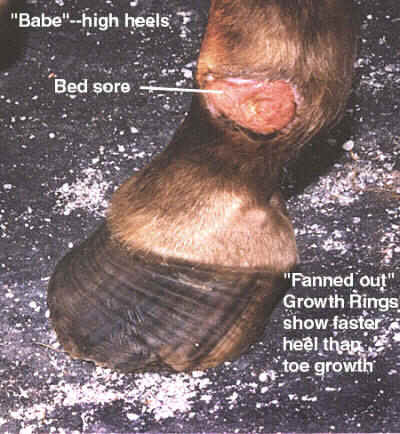
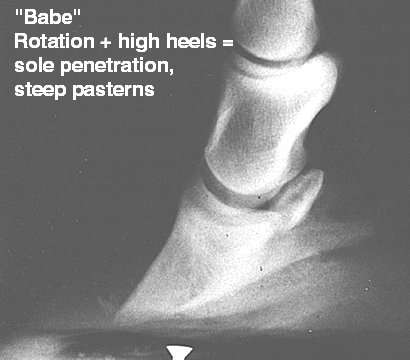
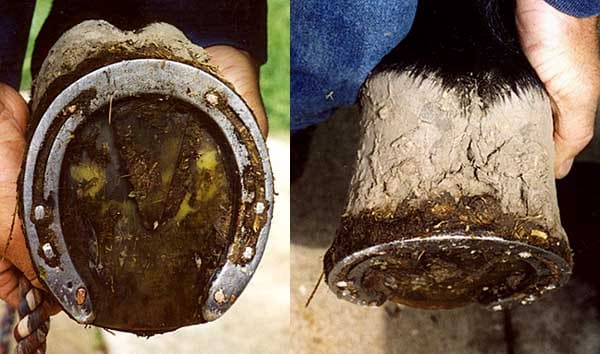
Foundered foot, inside and out
The success of this approach to laminitis hinges on trimming the feet OFTEN (ideally 2x weekly) when working with a foundered horse, keeping the horse on firm, non-concussive ground during the recovery period when he is barefoot, and using removable boots when working him on hard or rocky ground to prevent stone bruises--until enough sole and hoof wall thickness builds up, and enough stronger new laminae grow down to return the coffin bone to a more normal position.
Actually, trimming every 3-4 weeks is not often enough for optimum results in foundered cases, although it's fine for normal hooves that aren't in need of rehab. Dr. Strasser gets her spectacular results trimming with very subtle tweaks only where needed 2-3x weekly. This more closely mimics the ideal state, where a horse is exercising enough over varied (partly rocky) terrain that he wears himself down constantly and never needs trimming. When I say she trims 2-3x weekly, I am not talking about a full-scale peel of the entire sole, however! These are subtle little tweaks in selected areas--only where needed.
Although I discuss medications and nutrition to treat laminitis, the heart of what I am advocating involves repairing lamintis by INCREASING CIRCULATION and RESTORING THE BOTTOM OF THE COFFIN BONE TO A GROUND-PARALLEL POSITION by primarily mechanical means....frequent correct trims, and more movement from constant turnout in the company of other horses.
Restoring the bottom of the coffin bone to a ground-parallel position is one of the single most important aspects of both fixing and preventing rotation in the future.
(CLICK ON SMALL IMAGES TO SEE LARGER VERSIONS)
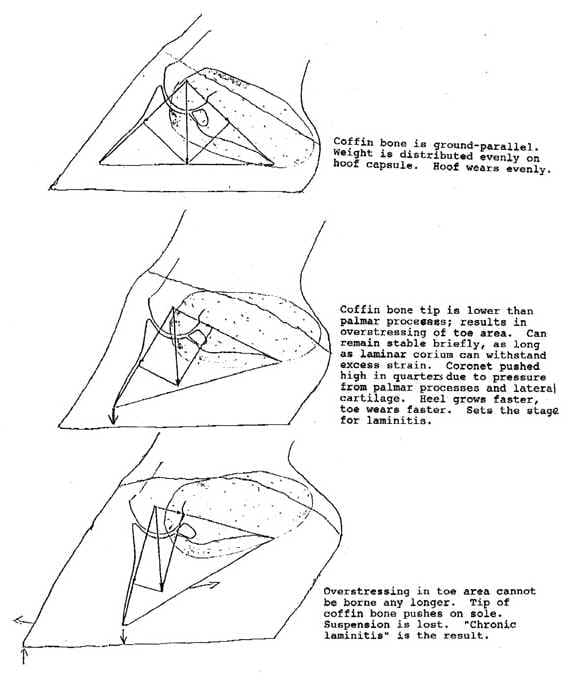
(Image courtesy Dr. Hiltrud Strasser)
Normal foot (no rotation) trimmed for
a ground-parallel coffin bone
Severely foundered foot
(rotation 30 degrees before toe profile backed up)
trimmed for a ground-parallel coffin bone
Note high heels on right hoof, which was not trimmed yet.
(Also note how tip of coffin bone remodeled due to long-term high heels.)
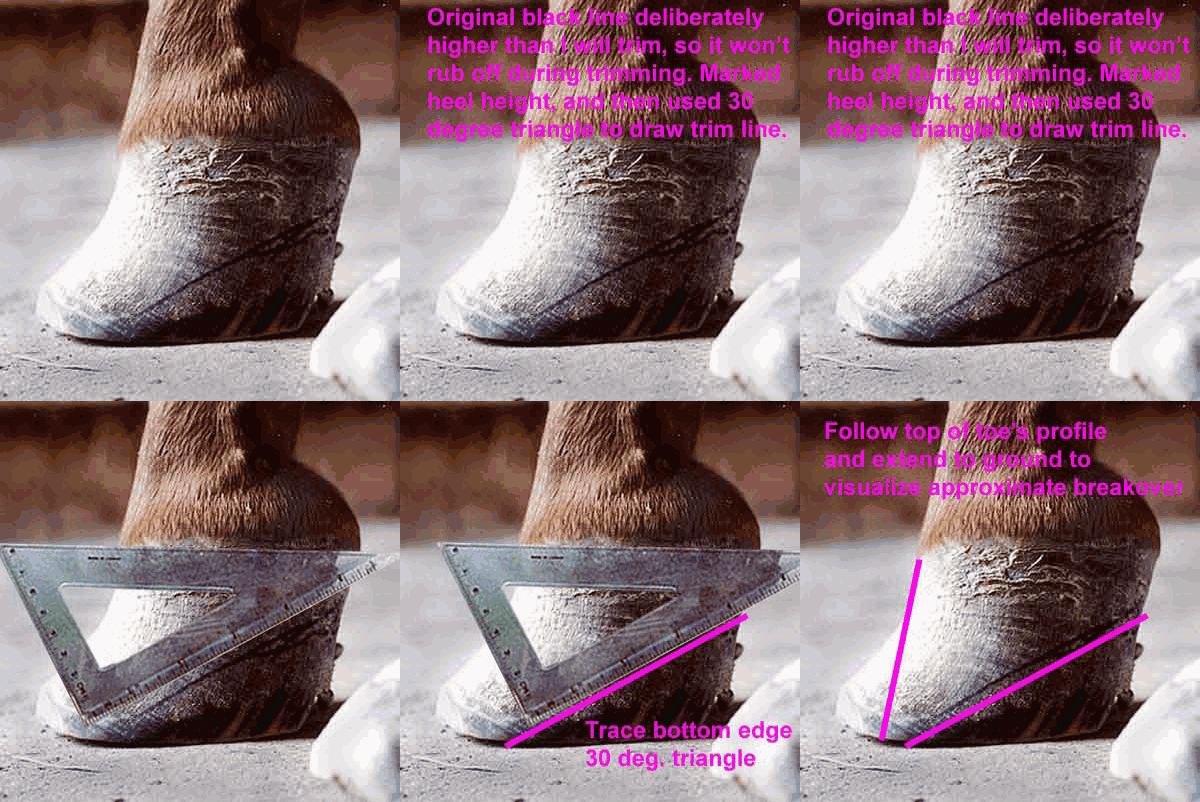
For the much more effective way to zero in on where to trim the foundered foot in the above photo than plugging in toe angle and length specs, or using live sole plane, Please click on Section 20 By marking a reasonable heel height, and then using a 30 degree triangle to mark where to trim the bottom of the foot safely, I got much better results. Trying to use toe length and angle specs...or trying to use live sole plane as my landmark for where to trim...would have not worked as well in such a severe case.
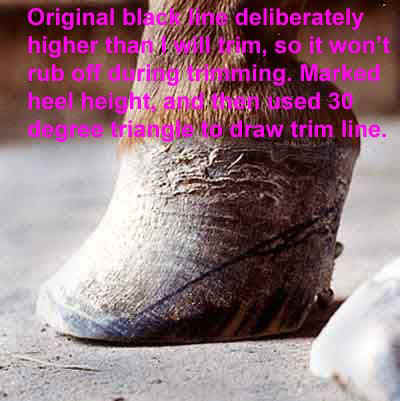
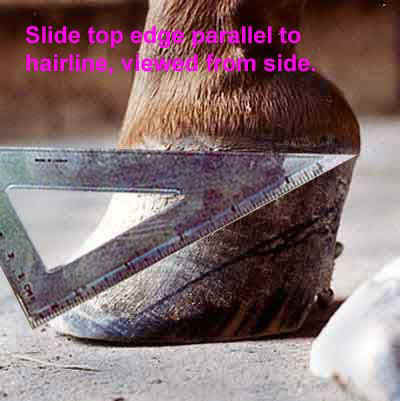
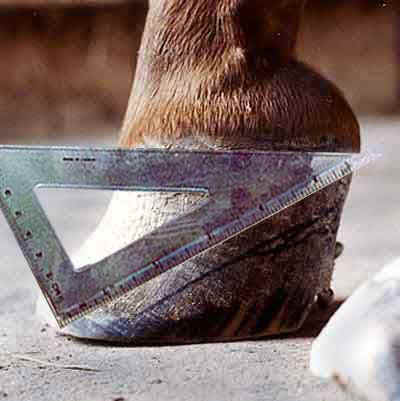
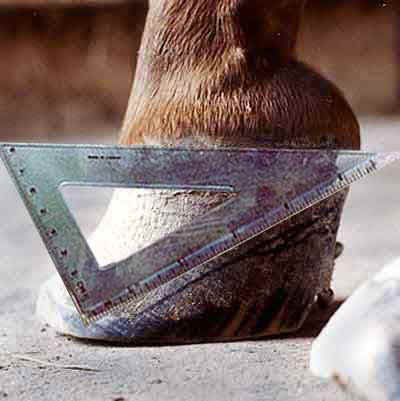
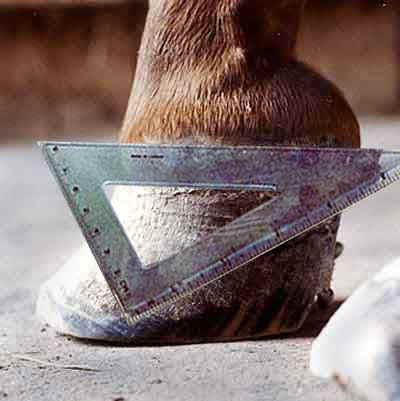
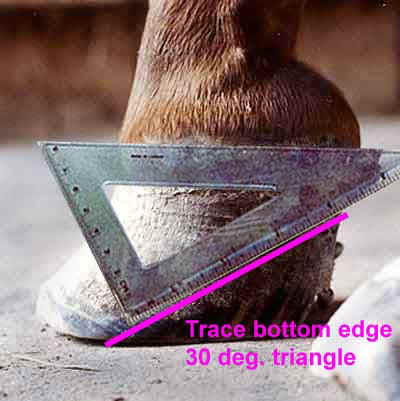
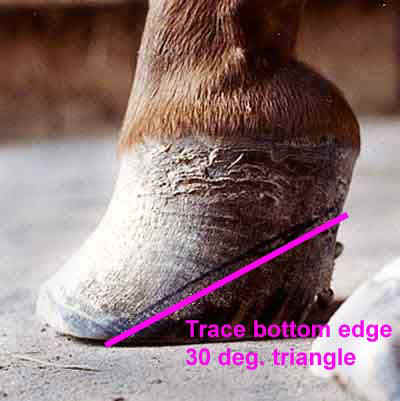
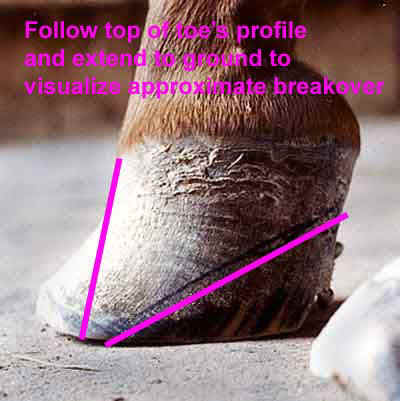
To see a video of how I marked where to trim on the very distorted foot shown above (in Section 20)--slower download because it's a 328K file size--Click HERE
This is completely at odds with conventional laminitis therapy. The orthodox view is that raising the heels will reduce the stress on the deep flexor tendon, thus reducing the likelihood of rotation. In fact, raising the heels inevitably puts the base of support out in front of the bone column, which also stresses the deep flexor tendon, sinking down with every step. It also throws more weight on the toe, overstressing the toe laminae and making rotation more likely.
What I am proposing is to shape the outside of the hoof capsule to more closely follow the form of the underlying structure.
The idea of aiming for a ground-parallel coffin bone is not new, however. In the 1894, David Roberge published "The Foot of the Horse, or Lameness and all Diseases of the Feet Traced to an Unbalanced Foot Bone, Prevented or Cured by Balancing the Foot." While Roberge was still using shoes, he at least was advocating correct hoof balance. Click here to see some of Roberge's drawings
Click HERE for Dr. Tom Teskey's thoughts on why he is no longer prescribing orthopedic shoeing for his equine patients.
I am very heartened to see that the ground-parallel coffin bone idea is being revived in the farrier community! Check out the articles below on the American Farriers Association web site by Michael Savoldi, resident farrier at California State Polytechnic University at Pomona for 28 years. The dissections illustrating the article are well worth looking at. While he talks about trimming walls even with the live sole plane to get a 'uniform sole thickness,' his last photo in the 2nd article clearly illustrates trimming that results in a ground-parallel coffin bone. I have been in favor of trimming in a way that follows the form of the underlying structure, and am in agreement with what he is showing. His comments about how an unbalanced hoof will result in sole distortion and coffin bone remodeling are well taken, and I have some x-rays illustrating coffin bone destruction in Section 7 of this site.
Michael Savoldi uniform sole thickness article
Navicular horses--the same trim works on them, with the one exception of how the toes are treated. For foundered horses, you back the toe profile up more aggressively. For navicular horses, you would just do a mustang roll to the toe. The most common problems with navicular horses are high, folded over bars pushing up into the hoof capsule, putting pressure on the navicular area, high heels and heel contraction. Relieving these problems will often give surprisingly fast improvements. For trimming details, go to Section 14
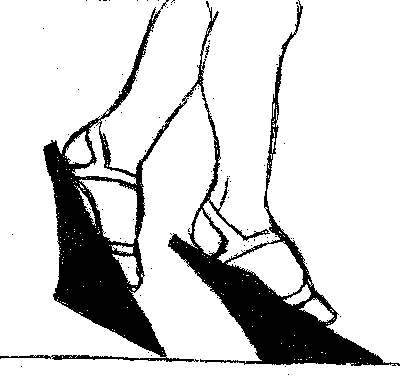
Although this is not directly equivalent to a horse--the real human equivalent is for us to be standing on just one toe--walking on something this high-heeled and under-slung will give a person a feeling for what high heels and having the base of the support out in front instead of further back and under the bony column must feel like to a horse...insecure, and very strained.
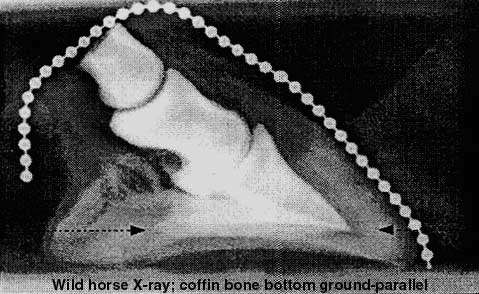
Further, an X-ray of a wild horse foot, published in Jaime Jackson's newsletter, shows that having the bottom of the coffin bone ground-parallel IS what is natural, not the high-heeled shoeing scenarios currently in vogue:
The other cornerstone of conventional therapy is the heartbar shoe. Both I and many of my readers have not had any progress with heartbar shoes, but we did have it once we did the barefoot approach. Heartbar shoes are mainly palliative.
The other area where I diverge from conventional therapy is drugs; I do not trust heavily medicating horses with multiple drugs. I have heard of too many complications.
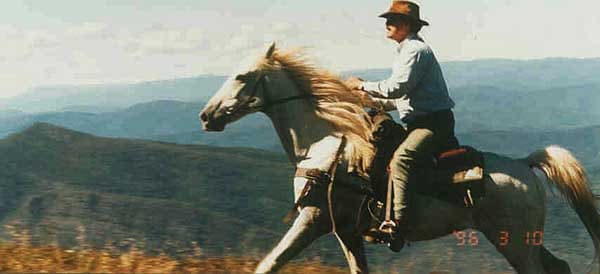
(Photo, courtesy of Rev. C. Scott Kroeger)
To give my readers a bit of hope, let me say that some of the people on the naturalhorsetrim list have been getting great results. Darolyn Butler-Dial, a prominent endurance rider from Texas, has been riding a formerly foundered horse barefoot on 50 mile rides this year. It takes good trimming, enough exercise, and generally following through, but it can be done!
I am also including a link to a report from Rev. C. Scott Kroeger, an Australian who is now so enthusiastic about barefoot that he headed the organizing committee for the Strasser DownUnder clinics in 2002 and part of 2003. He gradually conditioned his horses to go longer and longer distances on rough terrain shoeless. He brought along some Old Macs hoof boots on a recent ride, but did not need them much, and wound up loaning them to another rider whose horse threw a shoe. If he can ride 6-10 hours a day barefoot in the mountains for a week, surely we can gradually condition our horses for shorter barefoot rides! For his inspiring account of this ride, Click HERE!!
The Role of Gut Disturbances in Laminitis
Many laminitis cases have in common gut disturbances that result in a massive die-off of the benign intestinal bacteria. When you have a massive die-off of intestinal bacteria, they decompose inside the gut, releasing toxins. Toxins can lead to an inflammatory response in the feet...laminitis. Direct exposure to toxins via other means--retained placenta beginning to decompose inside a mare, exposure to black walnut via bedding in black walnut shavings, eating black walnut extract, eating poisonous plants like nightshade...can also lead to an inflammatory response. A snake bite is another possible way toxins can be introduced into a horse's body.
One of the most common triggers, though, is new spring grass (high in sugars and low in minerals) or grain overload. Too high an intake of high-sugar content food can acidify the gut, leading to a die-off of benign intestinal bacteria.
If you use a product like UAA Gel, or something similar, a 1000 lb. (454 Kg.) horse would get a 300 ml. (about 10 fl. oz.) dose, once or twice during an acute laminitis episode. This is far more effective than buying fish tank filter activated charcoal, as the filter charcoal particles are much coarser. This is a link for purchasing it: http://www.americanlivestock.com/pc-1872-15001-uaa-gel.aspx It is similar to what is used in ERs for drug overdoses, etc. I would want to get some in ASAP during an acute laminitis episode, but I wouldn't dose too many times, as it can be constipating. Constipation can lead to other problems, such as colic...
Here is an interesting quote from the pipevet.com site, which caters to sheep growers: http://www.pipevet.com/userfiles/file/SheepArticles/GrowingLambs/OVEREATING%20DISEASE.pdf Although this excerpt is from an article about sheep, sheep can also get laminitis from grain overload, as horses can:
| "Grain Overload. This is strictly a management disease where lambs are allowed to engorge a large amount of grain or when we change rations quickly. Sheep, along with other ruminants, need to be kept on a regular diet. If they are suddenly allowed uncontrolled access to grain the grain rapidly ferments in the rumen. This drops the pH of the rumen and causes, dehydration, lowering of blood pH and acid burns to the rumen wall. If severe this can result in a quick death. If the sheep survives the rapid change in pH the next problems that can develop are laminitis (founder) and polioencephalomalacia. Weeks after the incident the lamb can still be affected by liver abscess and poor growth rate due to severe damage of the rumen. If caught in the early stages grain overload can be drenched with sodium bicarbonate in cold water. The sodium bicarbonate will buffer the pH change and cold water will slow the fermentation process. Activated charcoal is also used to bind the starch and prevent further fermentation. Banamine and dexamethasone are useful to treat inflammation, pain and shock. If the lamb lives more than 24 hours it should be fed grass hay and probiotics to stimulate the rumen, treated with B complex vitamins to prevent polioencephalomalcia and treated with long-acting penicillin or tetracycline to prevent liver abscess for 2 weeks. Prevention is much easier than treatment. Changing rations gradually, secure gate latches and sheep proof feed storage can easily prevent grain overload. J. L. Goelz, D.V.M. . 22. No. 4, June 2002" |
Dr. Goelz mentions the gut becoming more acid. Several other laminitis triggers also involve a more acid gut--over-exertion, road founder and stress (lactic acid build-up). Over-eating new spring grass, which is sugary and mineral-poor also makes the gut more acid. This overly acid gut can result in a massive die-off of benign intestinal bacteria.
Many horse owners unwittingly set rescue horses up for laminitis by overfeeding grain to speed up weight gain. Many of these horses have leaky gut syndrome, and/or ulcers, and benefit from routine use of products like Vitaroyal's Nutrient Buffer: http://www.vitaroyal.com/equine/products/nutrient_buffer.html and probiotics. This plus a quality diet low in simple sugars is the safer approach to building a horse back up. Sweet feed loaded with molasses is a really bad idea for helping a thin horse gain weight.
Antibiotics used aggressively can also result in a massive intestinal die-off of the benign gut bacteria. Worming may also disturb the gut flora. Fevers can kill off benign gut bacteria. So can colic. Getting too many vaccines at once can sometimes cause adverse reactions as well. The grand old tradition of "spring shots": many vaccines, tube worming, and anesthetic for floating teeth, all given on the same day, is just too much stress for some horses. This may be behind why founder is more common in the spring even among horses not turned out on grass.
One of the things you can do to reduce an animal's susceptibility to gut disturbances is to supplement with probiotics routinely. You can also get your forage and water analyzed for mineral imbalances or deficiencies that can be corrected via supplements. Water pH is also of interest. High iron content in water is inflammatory, and an often over-looked factor.
Road founder does have a mechanical component--the laminae being over-stressed by continual pounding and overwork--but stress and over-exertion can also lead to a more acid gut due to lactic acid buildup. Rough hauls in the trailer also combine over-exertion and stress to stay balanced in a moving trailer...leading to the gut becoming more acid, followed by a massive die-off of gut bacteria.
Trying to reestablish healthy gut bacteria can be speeded up with probiotics. Dr. Kellon recommends two different pro-biotic products: The difference between Ration Plus and Equine Generator is that Ration Plus contains growth factors that encourage the good bacteria, no actual bacteria in it, while the EquineGenerator contains generous amounts of live bacteria to replace populations.?
Equine Generator--a stronger product with live bacteria, to be used initially after a massive gut bacterial die-off: http://www.bio-vet.com/equineproducts.htm
Ration Plus, what you can use routinely afterwards, after jump-starting with Equine Generator or something similar containing live bacteria: http://www.rationplus.com/purchase_horse2.html Even healthy horses can benefit from the routine use of digestive aids.
New!!! Dr. Kellon's article on FEEDING THE HOOF
-Table of Contents-
There are well over 150 photos of hooves, dissections, diagrams, etc. So I decided to divide it into sections.
For Fastest Downloads: go to "Section" links
For print-outs, use the "Full-sized photo version" links.
Section 1 Introduction. Getting the bottom of the coffin bone ground-parallel. This is the top priority in trimming foundered feet.
Full-sized photo version of Section 1
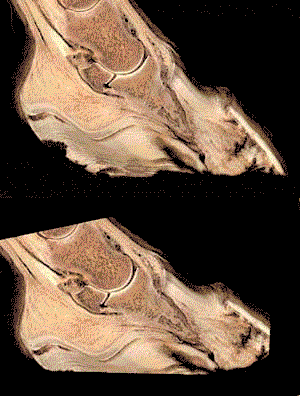
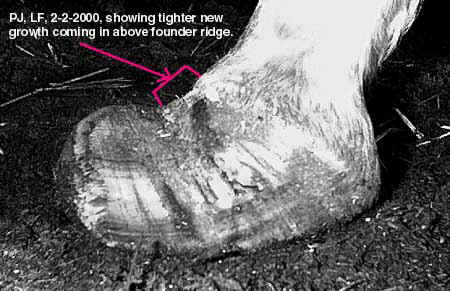
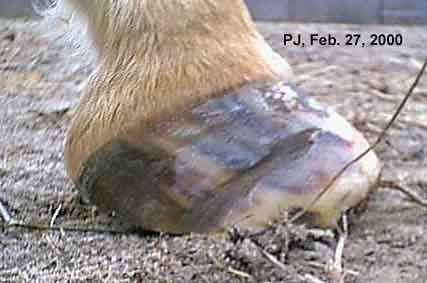
Section 2 Examples, showing both photos and X-rays, of several foundered horses. High heels lead to a tilted coffin bone; this leads to a pressure point on the sole; this leads to sole penetration. Showing the relief lowering heels and backing up toes can give a horse. Bad effects of high heels, showing an extreme example from Dr. Strasser's practice, and human equivalents. Nova's X-rays, showing how long-term high heels lead to coffin bone deterioration.
Full-sized photo version of Section 2
(same horse in above photos)
Section 3 The orthodox approach (lots of drugs, stall confinement, high heels, heartbar shoes) vs. the natural approach (mechanical--frequent trims, turnout and exercise to restore hoof mechanism--instead of drugs.) The dangers of over-doing drugs. Problems with bar shoes. Killing with kindness--overfeeding, under-exercising, over-medicating, shoeing, confinement. Although frequent (2x weekly) trims are cheap if you do them yourself, they can outperform approaches costing thousands of dollars. Photos of Sugar's progress. Self-cleaning benefits of having hoof mechanism and correct trimming.
Full-sized photo version of Section 3
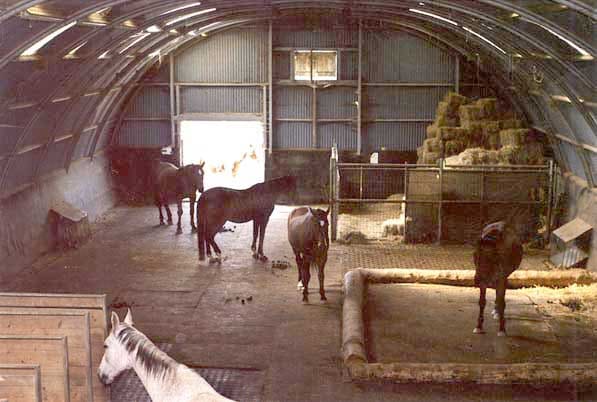
Inside Dr. Strasser's Hufklinik--freedom,
herd life and constant movement encouraged.
(Photo courtesy of Nancy Filbert)
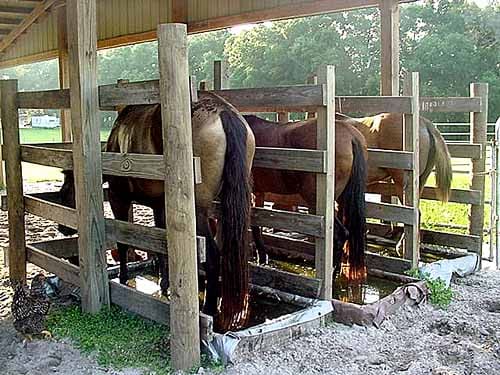
Daily exposure of hooves to water--feeding/soaking stalls.
(Photo courtesy of Anne Daimler SHP)
Natural board barn listings to help find barns with 24/7 turnout. Constant turnout and movement are key to the success of this approach.
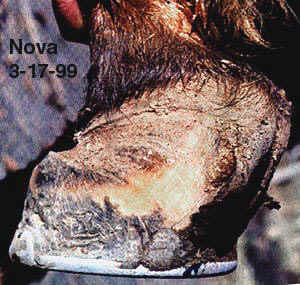
Section 4 The case of Nova, a horse with rotation over 40 degrees, illustrated with many photos. Finally making more progress with just correct trims, constant turnout and exercise than he made in 4 years of heavy drugs, resections and bar shoes applied at a veterinary school. Some things to understand about the method--it can result in more pain initially as circulation returns, and it cannot be applied piecemeal. You must make sure the horse is turned out with others and kept moving at all times. Confining a horse using this method can be dangerous.
Full-sized photo version of Section 4
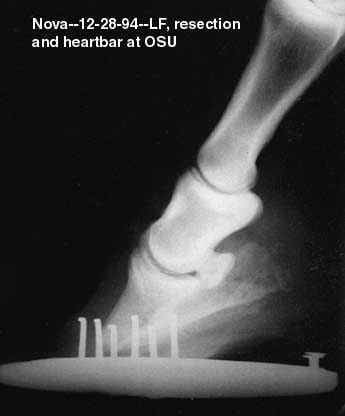
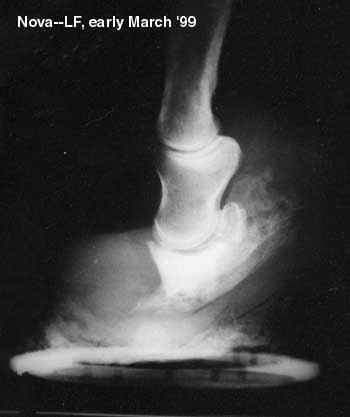
Nova: Destruction from 5 years of high-heeled
trimming and orthopedic shoeing.
Section 5 Dr. Strasser on why heartbar shoes and other frog support shoeing options are merely palliative, and will ultimately fail. Dr. Strasser's book, "A Lifetime of Soundness," and contact and clinic information for Dr. Strasser, Sabine Kells and Jaime Jackson. The numbing effects of shoes appearing to make the horse better, but at a price over the long haul. Upcoming clinics listed.
Full-sized photo version of Section 5
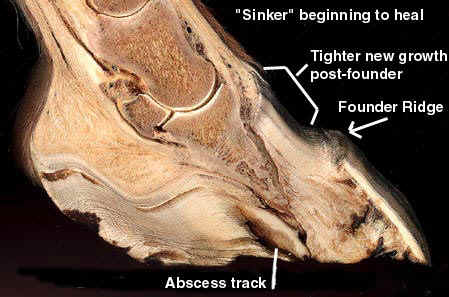
Section 6 A cross-section of a "sinker," illustrating what goes on in founder and where to trim. Dr. Pollitt's hoof video info, general introduction, credits, and introduction to my horse's story. Where to contact me.
Full-sized photo version of Section 6
Section 7 Foundered feet in cross-sections, showing various degrees of rotation. Discussion of laminitis, founder, rotation, abscesses, and predisposing factors.
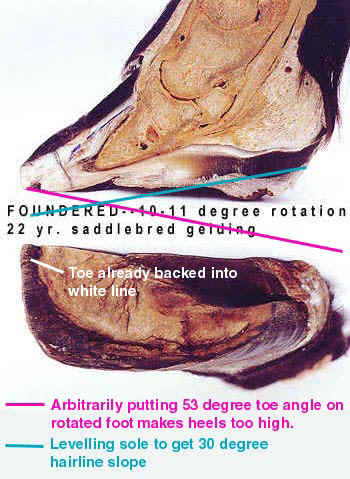
NEW!! When is a case almost hopeless, and when is it not? The condition of the coffin bones will have help predict this. The prospects for recovery are stronger when there is less bone loss.
Full-sized photo version of Section 7

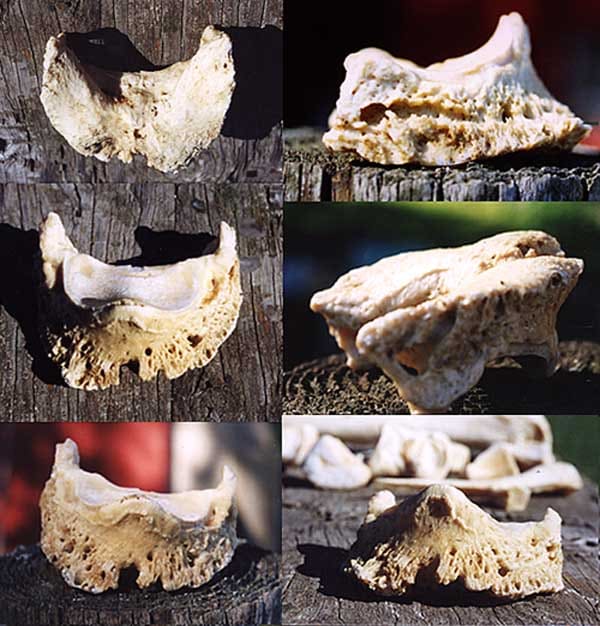
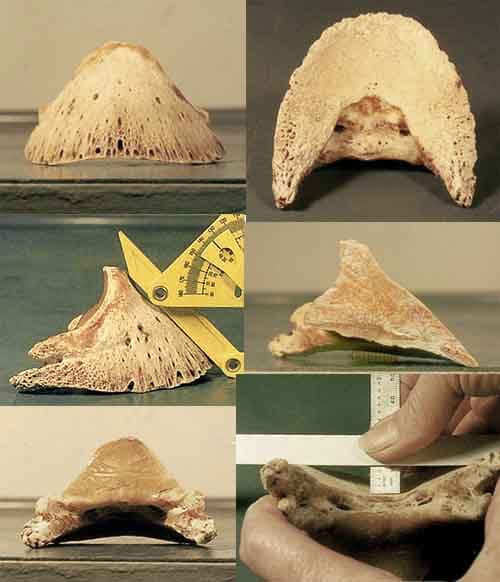
Severe bone loss on left; more normal coffin bone on right.
Coffin bone on far right photo was intact enough to
reattach; it was beginning to (note 'founder ridge.')
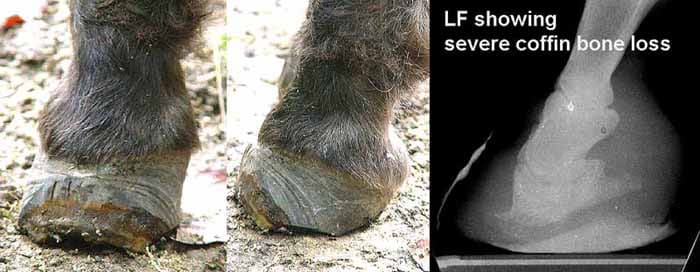

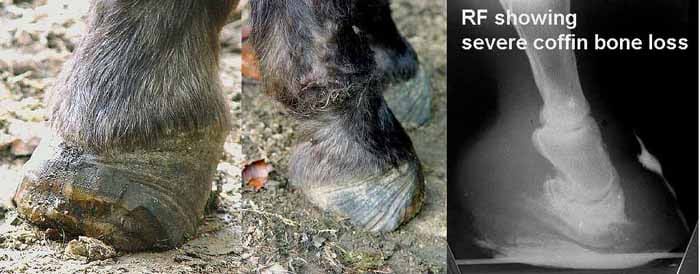
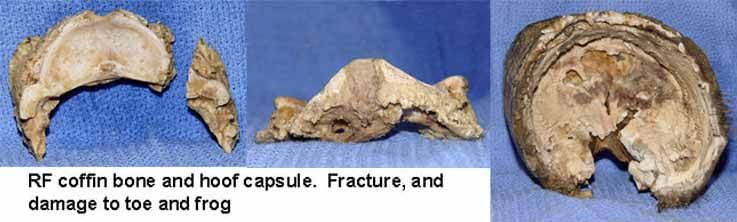
Rescue pony with years of founder; severe coffin bone loss.
Not enough toe surface of coffin bone left to re-suspend it.
This pony was eventually put down. Photos, Anne "Tree" Coley.
Section 8 Sole penetration, when the coffin bone cuts through the sole. Not to panic!
Full-sized photo version of Section 8
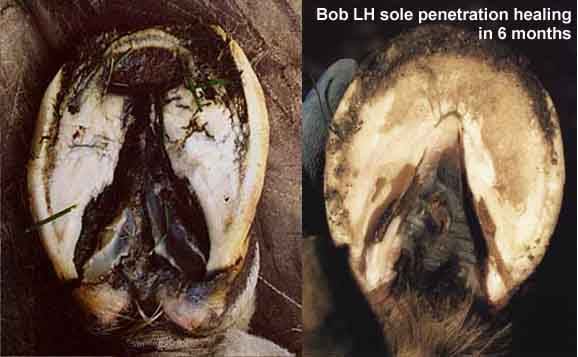
Bob--sole penetration healing in 6 months
Section 9 Pollitt's corrosions illustrating circulatory changes in acute laminitis. Opinions of Dr. Frederick, Dr. Strasser and Dr. Pollitt on circulatory changes during laminitis. Just what happens during laminitis. Systemic changes from poor hoof mechanism and circulation have far-reaching consequences. Handling acute laminitis. Laminitis triggers discussed, including toxic plants, fescue toxicosis, etc. Links to more info on toxic plants, endophyte-infected fescue.
Full-sized photo version of Section 9
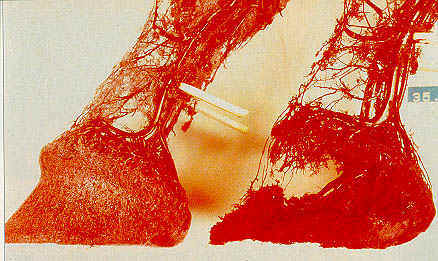
Normal circulation, left, and laminitis, right
(Dr. Christopher Pollitt, in American Farrier's Journal)
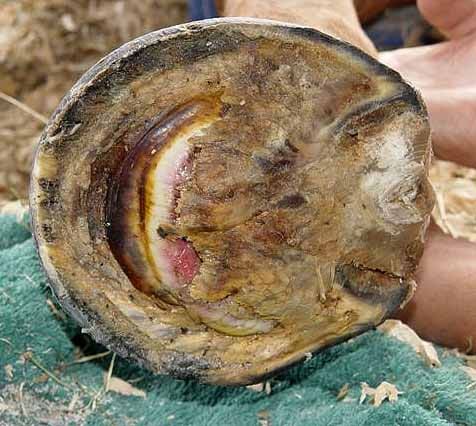
Section 10 UAA Gel (activated charcoal), your most valuable remedy for acute laminitis, besides frequent, correct trims and constant movement. Click HERE for mail order source of UAA Gel. More on laminitis triggers: grass founder, road founder, grain overload, stress and overexertion (lactic acid), antibiotics, the "spring shots" connection, and other triggers. Why some horses are less susceptible to these triggers. Highlights from the www.safergrass.org site. Hoof abscesses are common after laminitis and are part of the healing process. Barefooted resection on an abscessed hoof shown, performed without anesthetic or tranquilizers....or even restraints.
Resections are not always 'unnatural' and 'invasive!' In a hoof with serious detachment, when the hoof capsule is in danger of sloughing off, a resection can be a 'controlled slough.' In other words, it can remove wall that is harboring infection in 'gas pockets' (voids between the wall and laminae), remove wall that is crushing the blood supply because of excessive rotation, and remove wall that could snag on something and pull the whole hoof capsule off.
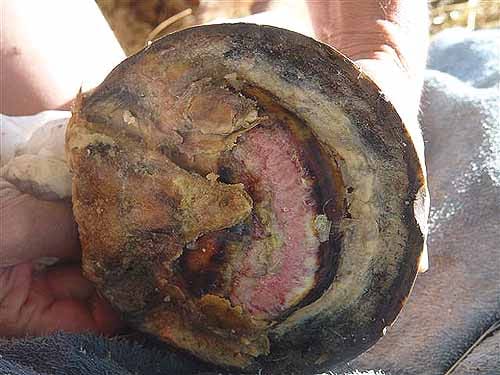
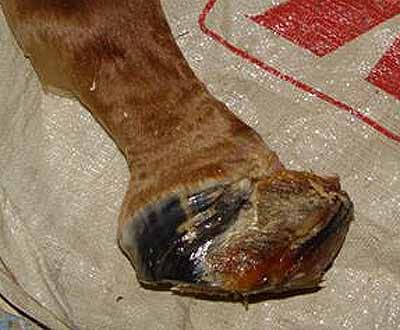
Below is the case of horse in New Zealand named Cracker, who was a 'sinker.' I was consulted via email on this case. They did a barefoot approach, keeping pads cut out of garden kneelers taped onto the feet with duct tape, rather than shoeing her. While the mare was in rough shape and down a lot, she is slowly improving. Their vet did the resection, but they did their own trimming.
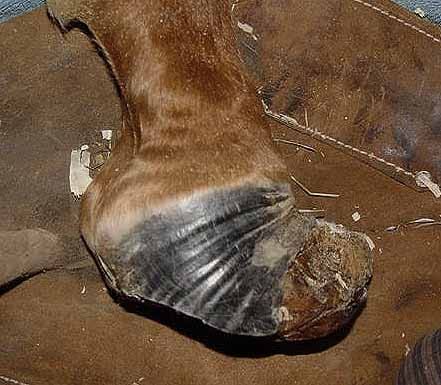
The remaining toe wall was crushing circulation in the toe. They did not resect both toes--only the worst. Photos from before, early 2006, and in May, 2006, showing acceptable toe wall growth coming back in on the resected hoof, but not the 'good' hoof that wasn't resected:
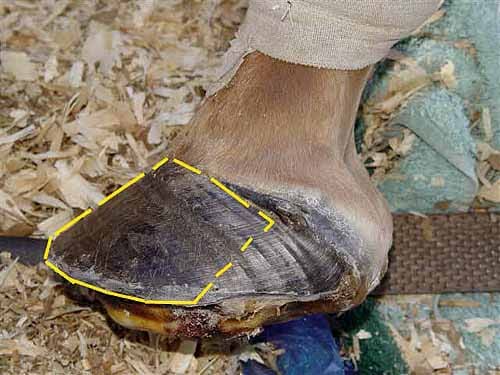
Cracker before resection, February 2006; rotated toe wall was crushing corium,
and she had extensive sole penetration (in late January). I drew yellow dotted lines
around detached area, which was detached on both sides.

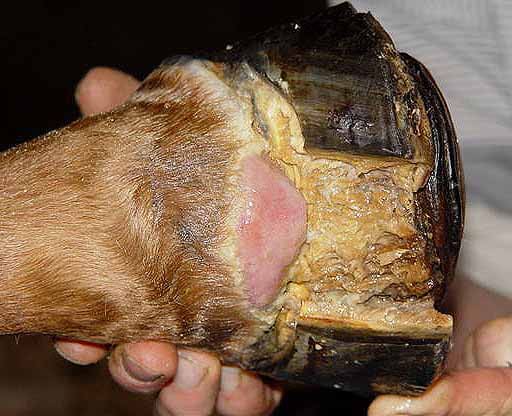
Initial grooving, which I advised them was not enough, and too sharp-edged.
Center, their next step which was an improvement. Soon after
this was done, dark, greenish, dead, foul-smelling tissue turned pink and healthy.
(I understand they took some more off later of the loose 'cafe door' walls.)
Sole starting to regrow, right, as of early March, 2006.
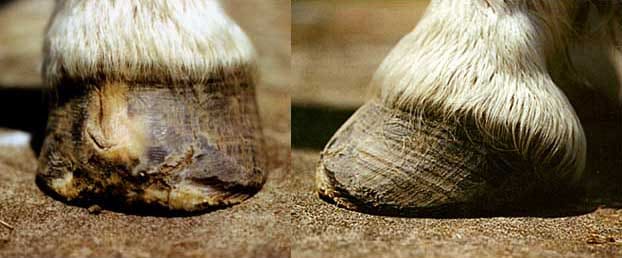
May, 2006. "Better' hoof, left, not resected, doing worse
than 'worse' hoof, right, which was resected. There is
still quite a bit that could come off the toe profiles on both.
Full-sized photo version of Section 10
Barefooted resection post-abscess
Section 11 Wild horse hoof shape as a model for trimming foundered horses. My earlier trimming strategy, including mistakes. Lowering the heels and backing up the toes--the basis of the trim. Some of Jaime Jackson's wild horse hoof photos shown. Link to Dr. J. R. Rooney's studies on how differing terrain effects wild horse hoof form. Heel contraction shown.
Full-sized photo version of Section 11
A warning that not all once-wild horses have excellent hoof form--see my BLM Auction Photos
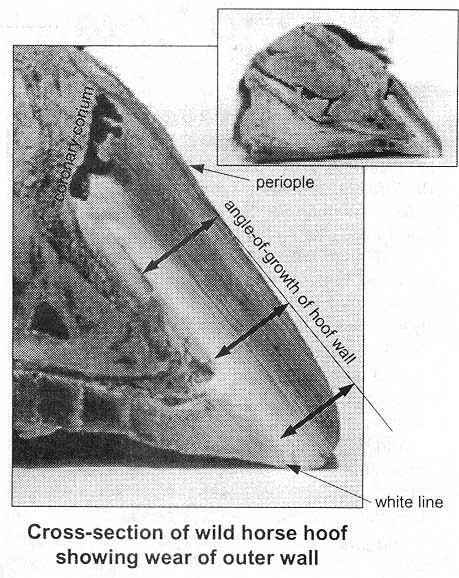

Wild horse cross-section from Jaime Jackson.
Natural wear on abrasive terrain (the mustang roll)
backs up breakover, which makes founder less likely.
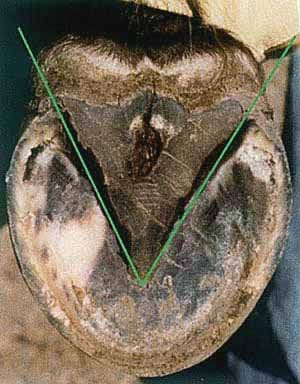
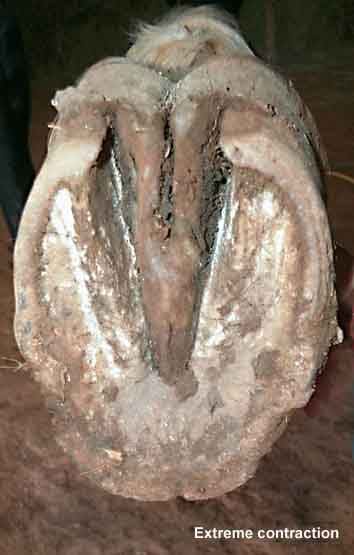
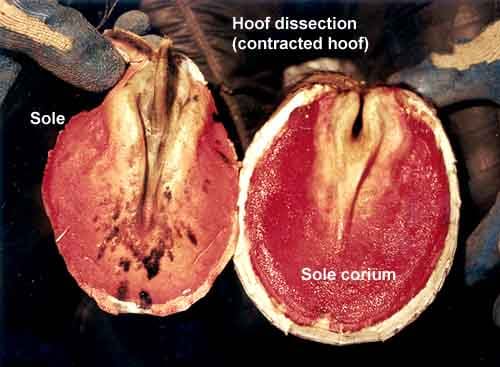
Ideal, open heels (left) and contracted heels (center and right). Note high heels,
overlaid bars and breakover too far forward on contracted hoof.
Photos by Sabine Kells (left) and Cindy Sullivan (center).
Section 12 More on my early mistakes. More on the good effects of low heels, and how a correct trim effects hairlines. Discussion of Bergy Bergeleen's "elastic shoeing." Mistakes to avoid: paring out the sole too far forward, high heels, going for arbitrary toe angles instead of first going for hairline slope. Correct trim takes leverage off toe and moves the base of support backwards under the leg.
Full-sized photo version of Section 12
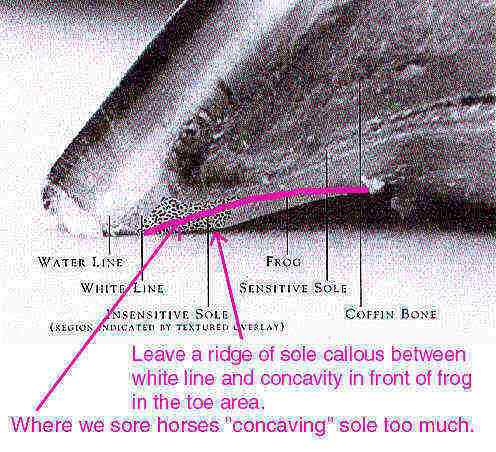
Wild horse cross-section from Jaime Jackson.
Section 13 Founder as a man-made disease that naturally living wild horses are free of. The role of poor hoof mechanism, high heels, long toes. Drugs and shoeing as palliative. The natural, mechanical approach actually results in more structural improvements.
Full-sized photo version of Section 13
Section 14 Correct trimming done in a Strasser class. If your time is limited, go to this section first! Examples of heartbars failing, trimming mistakes, damage from horseshoe nails, high heels and bars causing navicular syndrome, and using hairlines for correct hoof balancing. How getting the coffin bones ground-parallel results in harder, thicker soles; why high heels result in soft, thin soles in the toe area. Links to see some interesting cases by Dr. Strasser and Sabine Kells. This same trim, except for a less aggressive backing up of the toe, works on navicular as well.
Full-sized photo version of Section 14
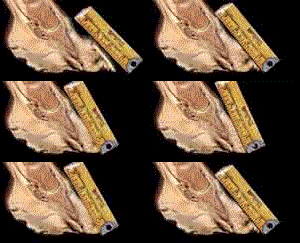
Shortening toes by backing them up, rather than shortening from the bottom.
Section 15 Treatment of acute laminitis. The dangers of over-medicating. Activated charcoal, trimming, etc. Trimming aids: professional-grade farrier tool sources, shoeing stands and stocks, equine slings for severely sore horses, and aids for trimming rock-hard feet--Dremel tools and Hoof Marvel. Nutritional supplements, especially magnesium, and the magnesium re cresty necks. VitaRoyal supplements. Dr. Eleanor Kellon's Jiaogulan and Nitric Oxide Protocol--an option well worth looking into!
Full-sized photo version of Section 15
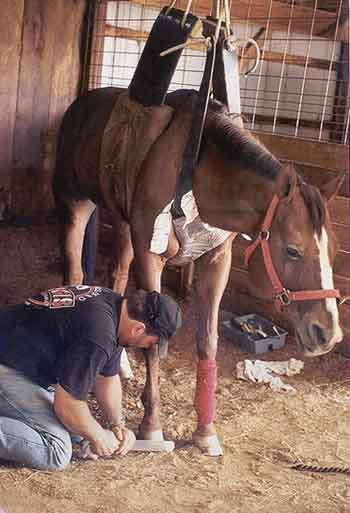
Sling enabling humane trimming of sore horse.
Section 16 More radical treatments discussed, and some warnings. Nitroglycerin, bleeding, cortisone, aggressive medicating. What can go wrong with grooving and resections, illustrated by a scary case of coronary grooving. Deep Digital Flexor Tenotomy--DON'T DO IT!
Full-sized photo version of Section 16
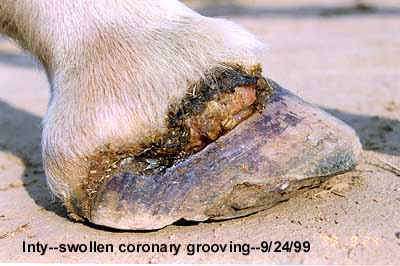
Grooving aftermath--don't do it!!
Deep Digital Flexor Tenotomy--AFTER
Section 17 More laminitis triggers--gut disturbances, digestion-related problems, retained placenta. Pituitary adenoma (Cushings Disease) a pre-disposing factor. Magnesium deficiency, high iron content in water, mechanical and road founder. Pregnant mares, and calcium for birthing. DMG, MSM, lactic acid. Cushings horses being predisposed to laminitis; treating Cushings with Permax or Hormonise.
Full-sized photo version of Section 17
For more information on Cushings, Insulin Resistance, and Hypothyroidism from Dr. Kellon, Click HERE
Section 18 De-shoeing, using boots for the transition period. Available hoof boots--photos and contact info. Good effects of the trim--increased athletic ability and improved posture and self-carriage. High-performance barefootedness. Letters from readers on horse boots and riding barefoot.
Full-sized photo version of Section 18
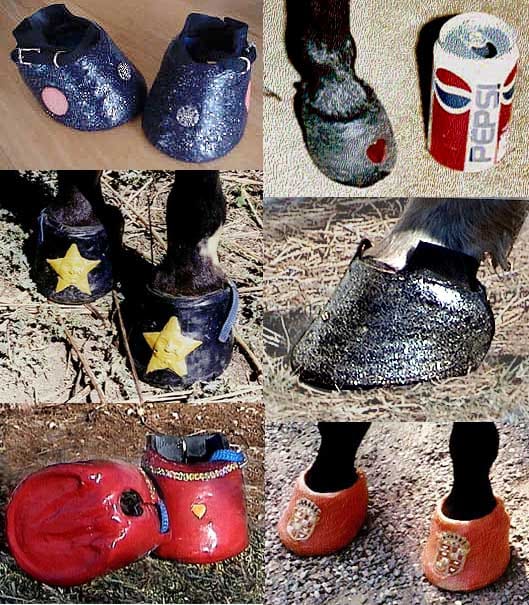
Custom-made HorseSneakers
(Hand-made from molds of your horse's feet; precision fit.)
More Info on HorseSneakers--click HERE
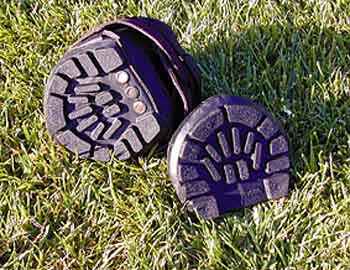
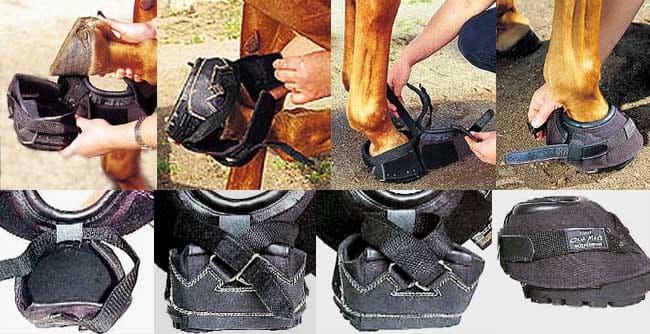
Old Macs--one of the better ready-made hoof boot options
(Available in 9 sizes, stay on well, adjustable, good traction and cushioning.)
The Old Macs company was recently sold to Easy Care; available in many tack shops.
A testimonial about Old Macs from a truly hard-core user:
Click HERE
Hunting for a deal on removable hoof boots? Or have some you bought in the wrong size? Check out my complimentary hoof boot swap/sales page: Click HERE for boot listings
Section 19 Riding a foundered horse again; the importance of collection, and collection de-mystified. (I actually talk about collection in plain English and describe equivalent human body positions, rather than get mired down in vague abstractions.) Reins, bits, saddle fit, rider position and minimizing concussion discussed. Treeless saddles and sources. Dr. Cook's bitless bridle. ARTICLE by Dr. Cook explaining the physiological reasons how bits adversely effect a horse.
Full-sized photo version of Section 19
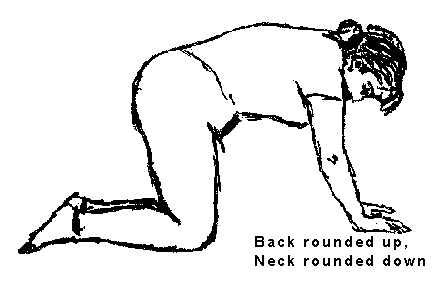
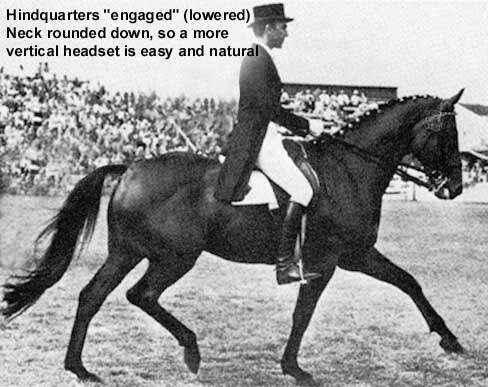
Horse posture compared to human--
here, back rounded up, neck rounded down
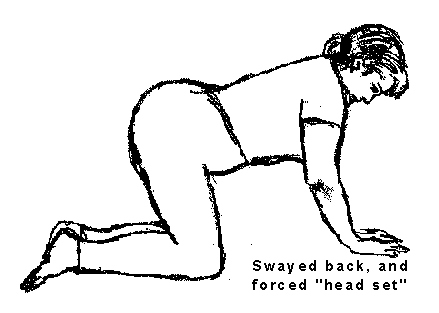
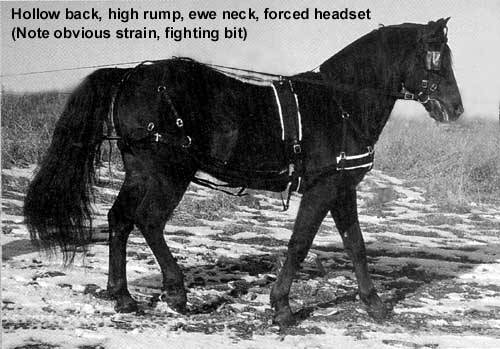
Hollow (swayed) back and forced headset results in
extreme muscular tension (pain) and overstresses fores.
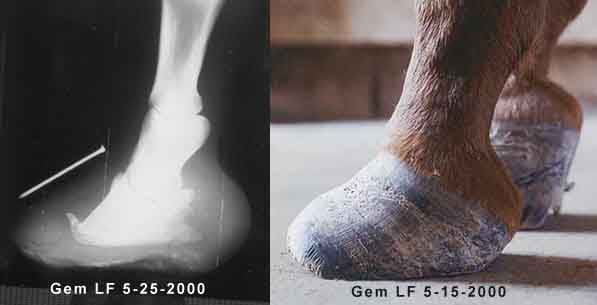
Section 20 Gem's story, a spectacular case of a mare who was so sore we needed to use a sling to do a Strasser-style trim. There was immediate relief.
Full-sized photo version of Section 20 New illustrations added showing how I use a 30 degree triangle and heel height to determine where it's safe to trim!
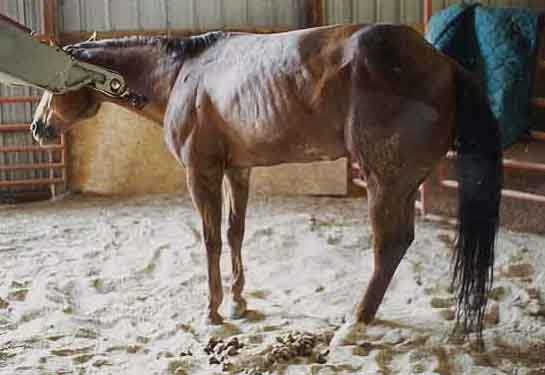
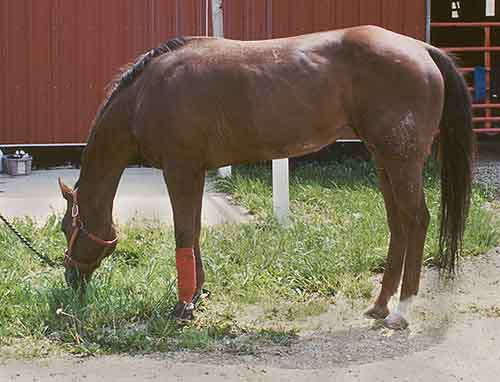
Gem--obvious, immediate relief from
trimming alone--no drugs used.
Section 21 Humane trailer hauling, how conventional forward-facing hauling can trigger laminitis, and how to solve this problem. The work of Dr. Sharon Cregier, Wentworth Tellington, and David Holmes' "Kiwi Safety Trailer." Odessa Homes' rear-face Equi Balance trailer. Loading animation to explain how to load horses to face the rear, which is much safer than driving them in to face the front of the trailer.
Full-sized photo version of Section 21
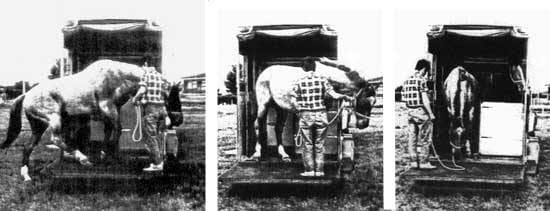
Loading a Rice "Kiwi" model rear-face trailer
Section 22 An extreme founder case treated by Strasser hoofcare specialist Nancy Filbert, with sole penetration on all four feet. 4 months later he was galloping and bucking; at 6 months, being ridden! However, this case represents the dangers of a horse with a lot of hoof damage "GOING TOXIC" and what risk factors make this more likely.
Full-sized photo version of Section 22
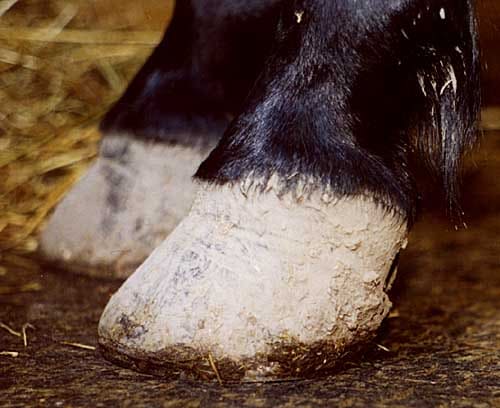

(Bob--before, left and center, and after, on right)
Understanding X-rays Although x-rays are extremely valuable, poor darkroom work can sometimes make them misleading. Some glaring examples shown.
Full-sized photo version of X-ray section
Section 23 Updated April, 2006 Barefoot performance (eventing) horses. Kendall and Tyler DeRoo's barefoot eventing horses may not be ex-foundered horses, but I want to show that barefoot is not just for rehabilitation--but that once horses are well, you can compete successfully barefoot. They have actually gotten better performance, self-carriage and traction with their horses barefoot than they had with shoes. These horses also had injuries on the race track that were supposed to have forced retirement, but turnout (rather than stall rest) helped them recover better and faster.
Full-sized photo version of Section 23
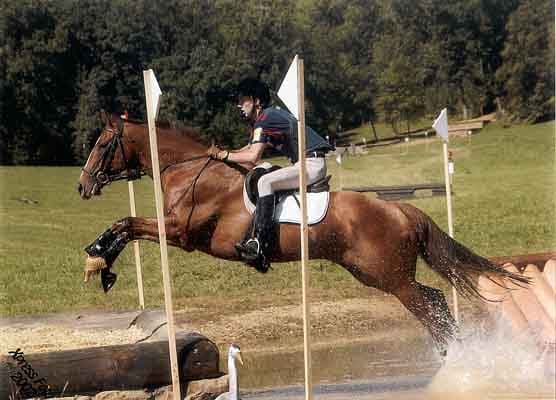
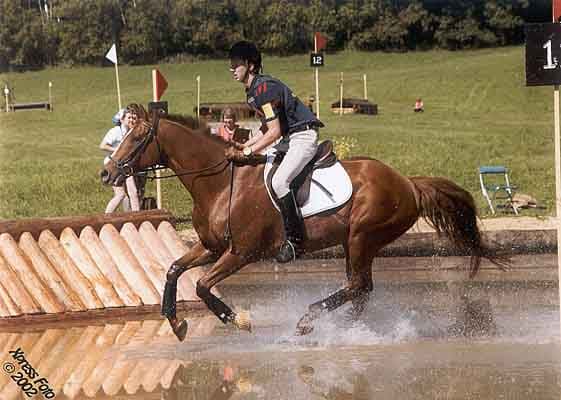
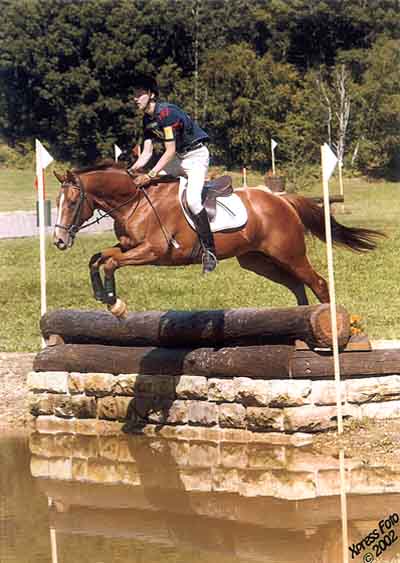
Tyler DeRoo eventing...on a barefoot horse.
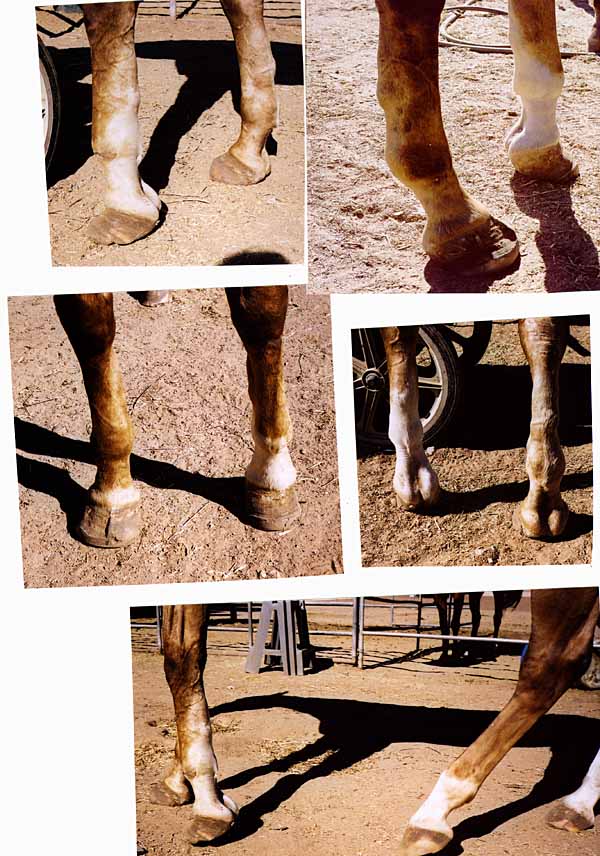
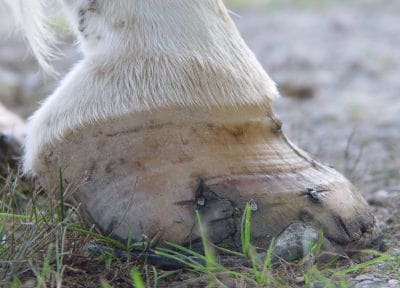
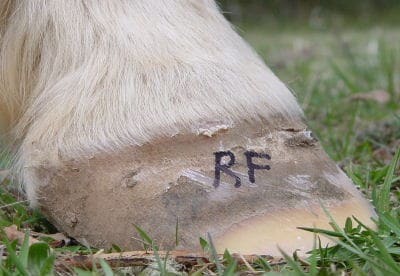
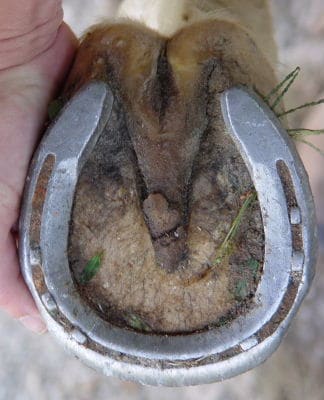
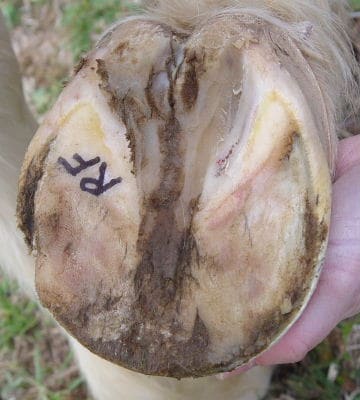
Section 24 New! Anne "Tree" Coley's Palomino case, which illustrates that a shod, cracked, weak hoof with considerable dishing and poor laminar suspension can be corrected with better trimming in a matter of months. While the horse's owners moved out of state before he was fully rehabbed, there was still remarkable improvement in a few months. This horse was only trimmed, on average, once a month, and still improved. Backing up his breakover was a key factor as well.
Full-sized photo version of Section 24
Navicular Using these methods on navicular horses. Changing hoof features that contribute to heel pain is the key; overlaid bars are the first thing to look for.
Full-sized photo version of Navicular
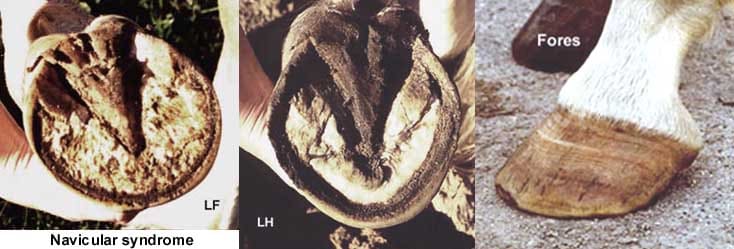
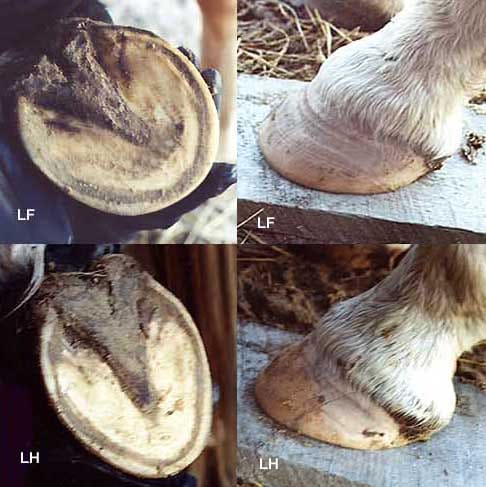
Before and after of a navicular horse who moved better afterwards.
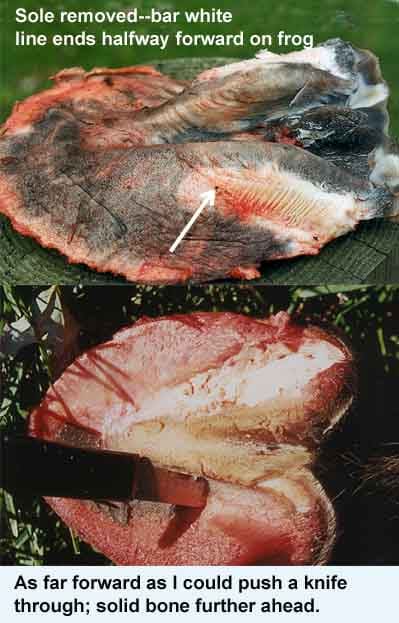
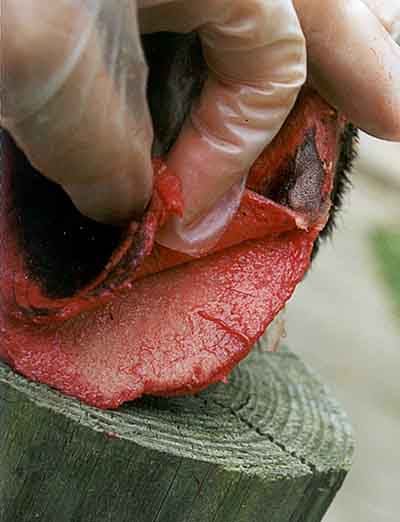

Illustrations and discussion of why overlaid bars are a problem.
Knuckling over and tenotomy discussed.
Interesting articles by John Stewart, MA VET MB MRVCS, a vet in Hampshire, UK
This is another vet supporting the ground-parallel coffin bone for foundered horses.

Strasser Hoofcare World Conference, September 1-5, 2016, in Prague, Czech Republic - World Institute for Holistic Hoofcare.
The WHH is the governing body for the World Conference for Holistic Hoofcare.
The conference is going to be held from 1-5 September, 2016, in Prague, CZ. It is open to Strasser Hoofcare Professionals and students.
The main focus in 2016 will be on the application of various trimming techniques and experience exchange between the participants. As such, there will be the following format:
More information: http://www.hoofinstitute.org
Barefoot horses CAN perform! Barefoot is not just for rehabbing lame horses.
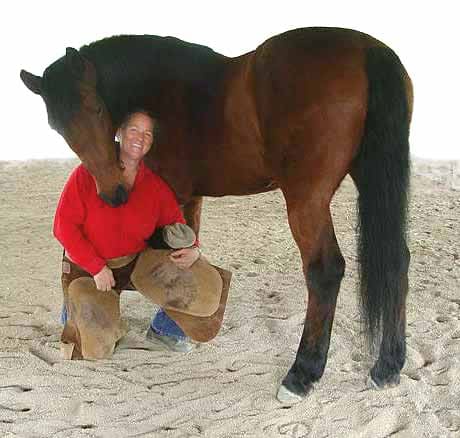

Martha Olivo went on a 1000 mile ride from California
to Texas on her barefooted horse, Cisco
People have been asking on the naturalhorsetrim list what is going on with Martha Olivo's cross-country ride. I've been wondering, too, so I called her recently.
Basically, she is cutting her cross-country ride short. She admits that she dove in without all her ducks in a row, both financially and logistically. The last straw was when her van broke down, and the repairs drained all the money she had at the time. (The format of the ride, BTW, was that she would drive 100 miles, and then stop, and ride 20 miles a day for 5 days, covering 100 miles a week on horseback. Then she would teach on the weekend, and give Cisco a couple days off. This means that she did have to have a van to pull the horse trailer between weekly stops. She also slept in her van.) Anyway, she went about 1000 miles before she ended the ride.
She doesn't regret giving it a try, though, and would love to do it again...only next time, she wants to be better prepared in terms of financing and practical arrangements.
Anyway, she is back at her ranch in Texas, and interested in lining up some more clinics. You can contact her at hoofgoddess@msn.com or 505-401-4240. You can also book clinics by contacting Jennifer Forster at jenifae3@yahoo.com
Her web site, http://www.marthaolivo.com has more details of upcoming clinics and contact info. For doing just a 1-day clinic, she wants a minimum of 20 people.
I asked her how the ride went, and what some of her findings were. First, in terms of equipment, she found that her treeless saddle was not working out for 20 miles a day, day after day, so she switched to a treed saddle. She felt fortunate that she could find one that fit Cisco. I didn't get the details about the saddle she switched to, though.
Also, she was elated with how well the Hoof Wings worked out. It depended on ground conditions, but she figures it averaged out to Cisco having them on about half the miles he traveled. She had no soring or rubbing problems with them, and claims Cisco had great traction in them. For more on Hoof Wings, http://www.HorseSneaker.com
She was excited to see that she could straighten out Cisco's pigeon-toed conformation with trimming and lots of movement. She said that she feels the reason for him being pigeon-toed was that his inside bars were higher, and this was in part reflected in his bulged-up hairlines on the insides of his front feet. Keeping after his inside bars, and putting a lot of miles on him, have straightened out his conformation. Often we hear that if you don't get the legs
straightened out in very young horses by keeping their feet balanced early on, you've lost your chance to change their conformation. This experience proved to her that it is possible to straighten out an older horse's conformation, too.
She is also looking for someone to live on her ranch, and take care of her horses when she is out of town giving clinics. I believe she has 8 horses right now...mustangs, gaited horses, QHs, even a warmblood mix. They are not young stock; they've all been started.
Check for more info on upcoming clinics at www.marthaolivo.com
Oregon School of Natural Hoof Care
Host: Cheryl Henderson
ABC Hoof Care
Jacksonville, Oregon
541-899-1535
They plan to establish a school every quarter. Sept 11-17, 2006 was the 1st graduating class. This school attempts to be 'non-denominational,' and incorporate ideas from several of the trimming schools of thought.
It will be mostly hands-on. Cheryl is sending reading materials ahead and all lecture time will have tools available for working with the hands while listening. Cheryl has been working hours daily with pictures and programs.
Subjects to be discussed and learned are: business planning, physical therapy for the injured horse, wound care, assessing body problems of the animals and how to help, abrasive trimming, hand tool trimming, anatomy, and several skill developing techniques to equip the student with a good basis to work and help the hoof.
Cost is all-inclusive: $1,000 provides lodging, food, all tools to get started in hoof care: 2 knives, rasp, sharpener, angle grinder, arm guards, safety glasses, rubber bucket for tools, school materials, all hoof styles to work on.
This is a resort-like environment with campfires, waterfalls and mountain pleasure. Family members are welcome to come as company, and pets are welcome, also. There will be a tour of the area for those who can stay after the clinic. Either a trip to the BLM mustang holdings in Burns, or the Redwoods, and some of Oregon's unusual geological areas of interest. Depends on who can stay over a few extra days, and what they can do to accommodate them.
The Horses Hoof Magazine also does 'non-denominational' weekend introductory trimming clinics. Hosted by James and Yvonne Welz. James is a former Strasser SHP. More info: www.thehorseshoof.com
They also have podcast where you can view James using an angle grinder to trim:
Go to www.thehorseshoof.com and click on the link, THH Trimcast. Then click on the photo of a hoof being trimmed with a grinder to see the video.
I do not endorse the way they are leaving bars overlaid, though.
Phil Morarre has a DVD out on how to trim using an angle grinder, and gives clinics on this as well.
http://www.softouchnaturalhorsecare.com/dvd.html
Article from The Horses Hoof Magazine about one of his clinics, plus some tool sources listed:
http://www.softouchnaturalhorsecare.com/article.pdf
He also heads the abrasive trimming Yahoo group that was originally started by Bob Creel.
http://pets.groups.yahoo.com/group/abrasivehorsehooftrimming
Many horses accept rotary tools quite well, and someone with limited strength can get a trim at least roughed in with grinders. You could put the finishing touches on with traditional farrier tools. It is useful to have someone steady the foot on a hoof stand when you are working on it--easier on you and your back.
Phil feels that the angle grinder is the tool of choice for him. He used traditional farrier tools for many years, as did Bob Creel, so it is not a matter of them settling on using angle grinders because they didn't have the strength to use traditional farrier tools. From a recent post on the naturalhorsetrim list, Phil wrote:
| "Over the last 5 or so years I have tried every conceivable version of power trimming tool, and while I agree with the moderator that a flexible shaft is far better than trying to manipulate a spiral saw on a hoof (an angle it was not designed to operate at), I have found the angle grinder with a 4", 40 grit zirconium flap disk to definitely be the tool of choice. It does it all, wall, sole, bars, a beautiful mustang roll and with more finesse and control than any of the other choices. Not to mention less effort and less time. The horses actually enjoy the massage it gives them although a few (about 5%) need to get used to the idea. The shape of the 4" disk makes it perfect to give a nice gentle concavity to the sole allowing you to remove as little as one thousandth of an inch or as much as you need to, you have complete control. It takes no special skill or any long learning curve (like with hand tools) to master trimming this way. And in case you were wondering, it does not create a lot of heat. |
Bob Creel, who had been a farrier for over 30 years, told me he thought grinding more nearly replicated natural wear and self-trimming than using tools that, essentially, make cuts. He also did not have any trouble using traditional farrier tools, but he came to believe that grinders were intrinsically better. Grinders make trimming a lot more feasible for many women horse owners with more limited upper body strength, though. Horses are less fussy when you can get a trim done faster, too.
Hoof Knife Sharpening Tips!
(Why beat your head against a brick wall with a uselessly dull knife?)
http://www.youtube.com/watch?v=hXjr4RCFmhI
Great how-to video! In a minute or 2 with a bench grinder, he gets his knife sharp enough to shave the hair off his arms, and slice through leather pads much more readily than it did right before he sharpened the knife. He emphasizes what angle to hold the blade to the buffing wheel...close to 20 degrees.
http://www.yukonforge.com/FarrierTips.htm
The second link sounds involved, using a bench grinder, etc., but this is actually the way you REALLY get a knife sharp. It goes into a better explanation than the video on the how's and why's, what products to use, the theory behind how you are shaping the blade, etc. He also mentions some important safety considerations for sharpening your knife on a buffing wheel that are not mentioned in the video.
http://www.naturalhoof.co.nz/sharpen.html
This shows sharpening your knife with just a ceramic grit sharpener. Slower than a bench grinder with buffing wheel, but he explains things well. He mentions not using files and scrapers, which can be tempting because they are more aggressive. He prefers ceramic grit sharpeners, which are similar to fish hook sharpeners, etc. Good entry level sharpening info if you're not going to spend the money for a bench grinder. He also talks about putting a 20 degree blade angle on the beveled side of the blade.
None of them angle the flat side of the blade; they just go over it once over lightly, flat, to take off any burrs that formed when sharpening the beveled side of the blade. If you do angle this side of the blade, you will, in effect, make the edge of the blade a bigger angle, and therefore, less sharp.
The pros are using bench grinders with muslin buffing wheels, and two grades of buffing compound--the final one being the finer white polishing compound. The video shows a guy with huge strong hands and arms sharpening his knife. If even HE needs his knife to be that sharp, certainly we do! I know...we're all balking at the idea of investing in a bench grinder, and hope some $10-20 hand-held sharpener will do as well. The truth is, it won't. :-( You can actually do some damage to your blade with sharpeners that are too fast and coarse, like scrapers.
Cheap knives have poor grade steel in them. They won't take a good edge, or hold a good edge. It's not worth it to economize on your knife. The knives you get in tack stores and feed mills are usually not good steel. Buffing wheels and polishing compound can be purchased at home improvement stores--you don't have to get them from professional farrier supply houses. But you will probably have to go to farrier supply houses to get professional grade farrier knives. There are plenty of links for online ordering at farrier supply houses here: http://www.horseshoes.com/supplies/alphabet/allsofmf.htm The F. Dick knives are a good choice...
Some of the 'non-denominational' trimming courses do borrow more from current trimming fads than I am comfortable with, such as Ramey's latest ideas on leaving higher bars and heels. I have also seen bad results from leaving casts on too long.
HoofCareUnLtd. in Horrell Hill, Hopkins, SC
Claudia Garner, instructor
$100.00/Person, includes Lunch
Contact: Claudia Garner, 803-647-1200
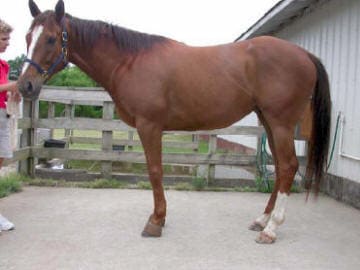
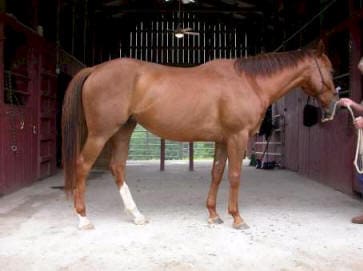
Before and after
Equine Hoofcare
Barefoot Performance Trimming
The "Why" and "How"
Sample clinic schedule:
10 AM – 11 AM--Introduction, Lifestyle, Psychology, Nutrition
11:15 AM – 12:15 PM--Anatomy and functions of the Hoof
Lunch--1 PM – 2:30 PM
Thoughts about shoeing, evaluating and recognizing hoof form
2:45 PM – 3:45 PM--Laminitis and founder-not a death sentence
4:00 PM – 5:00 PM--Dissections, questions and answers
For more information: http://www.hoofcareunltd.com

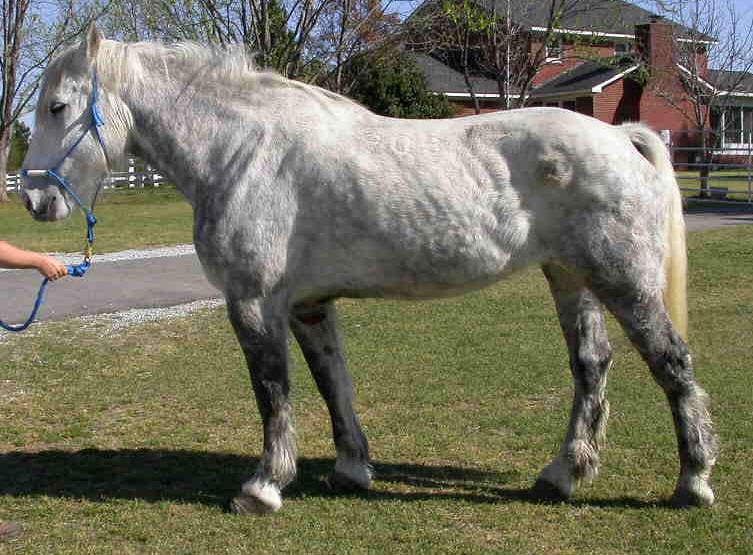
Before, and after
Success stories: http://www.hoofcareunltd.com/Success.htm

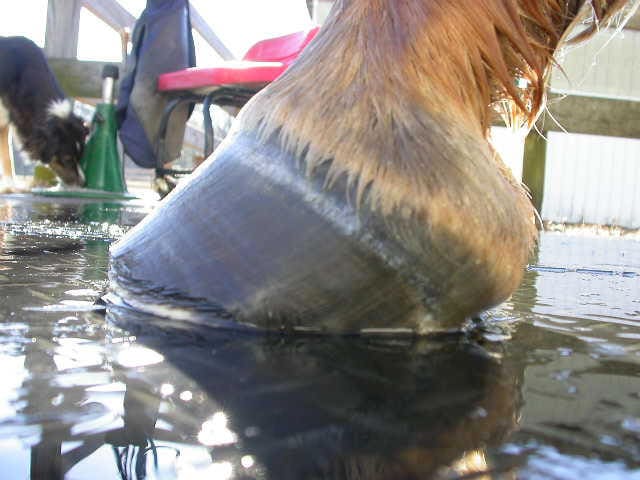
Before, and after
Claudia is a Strasser-trained trimmer, and involved in teaching a new trimming course. She wrote me: "We are adhering closely to the Strasser school of thought, but we are also advocating to leave the horse as sound as possible at all times and to not be radical at all. There is a lot of instruction about the basic trim, something that was always a shortcoming of the Strasser course. We thought that once one can trim a basic hoof, the corrections come much easier. Kind of like first learning to crawl before you dance." She also has an interest in rehabbing seriously lame horses in her clinic.
Claudia and Charles Garner
http://www.brenderupathorrellhill.com
http://www.hoofcareunltd.com
http://www.hoofcare.us
300 Saddlemount Drive
Hopkins (near Columbia) SC 29061
803-647-1200
Claudia is involved with the school at the International Center for Equine Arts:

Equine Hoofcare Professional (EHP), 9 month certificate program:
Click here for more information
Online Hoofcare 100, 7 month self study course:
Click here for more information
We are proud to introduce our new cutting edge Online Hoofcare Program. Self study with 7 Modules of Equine Hoofcare learning. 9 months of online access. A first in online Hoofcare training. Online and at your fingertips without leaving home.
Sign up is available immediately starting each month.
A great program for veterinarians and horse owners who are interested in the best of Equine Hoofcare theory, but not interested in the trade of trimming or our EHP 9 month certificate program.
contact us with your questions
www.internationalcenterforequinearts.com
info@internationalcenterforequinearts.com
There are some really interesting cases on http://www.healthehoof.com/home.html
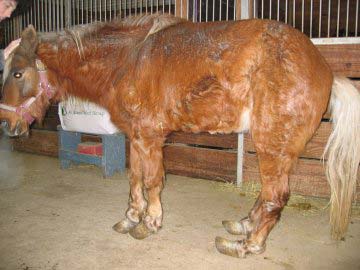
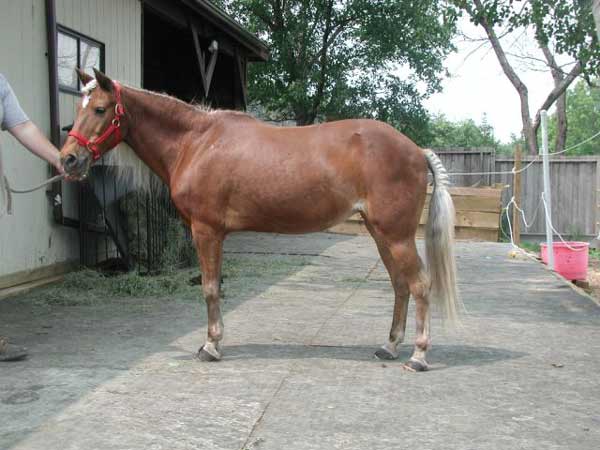
Before, and after
Sheri Fisher and her husband, Dr. Mark Fisher (who is an orthopedic surgeon) have a rehab clinic in Minnesota. Their sister facility is a 35,000 acre working cattle ranch in Wyoming where partially rehabbed horses can be sent to live much like the mustangs Jaime Jackson wrote about, furthering their rehabilitation. Sheri is Strasser-trained. There are some really serious cases that have been turned around on this site. It's almost too slick a site, though, with distracting romantic music playing while you look at it. A much different effect than my grimly utilitarian approach to web page building! :-)
My Pets--and caring for wild orphan babies There are a few photos of my pets here. Because of people asking about how I took care of orphaned rabbits, I summarize some of the material in "Wild Orphan Babies," a really useful book that is no longer in print, unfortunately.


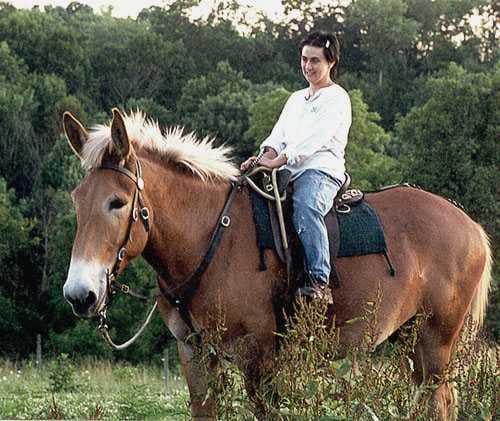
The Barefoot trim approach in action:
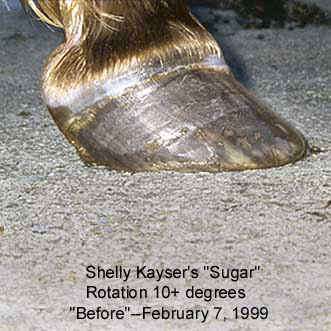
Shelly Kayser's "Sugar"--February 7, 1999 (left) and May 24, 1999 (right)
(The heels still were too high in the second photo)
(Photos of Sugar courtesy Shelly Kayser)
In the February photo the toe wall is pulling away from the
coffin bone higher up than it is in the May photo.
Toe backed up to white line 2-3x week--
constantly keeps leverage off during recovery

John Rosch's foundered TWH (above) shows a stretched out white line at the toe shrinking back to a much tighter, narrower size, despite less than perfect trimming and not doing it often enough. The heels are still contracted because he was not doing opening cuts, but in general, the horse went from being barely ambulatory to being rideable again.
Despite how simple and inexpensive this approach can be, it can work better than approaches costing thousands of dollars. I made no progress hauling my horse 2 hours each way to a university vet school and having him maintained in heartbars. One of the reasons for this is that they only reset him every 8 weeks. I made much more progress staying home and doing my own trimming more often. It is very labor intensive, though.
If you are not prepared to do your own trimming, however, you will end up spending more on farrier services, as the commonly accepted standard of trimming every 6-8 weeks is entirely too infrequent. The more often you trim the faster your progress. Do not assume your farrier understands this trim, however.
The information in these pages will help horse owners who do not have access to excellent farrier service to do their own work. It is not a a substitute for hands-on training, but it at least is an introduction to Dr. Strasser's trimming techniques. For feedback on how you are trimming, you can consult with Dr. Strasser's hoofcare specialists. Regrettably, Sabine Kells is getting too busy with the student caseload to take on more photo consultation cases.
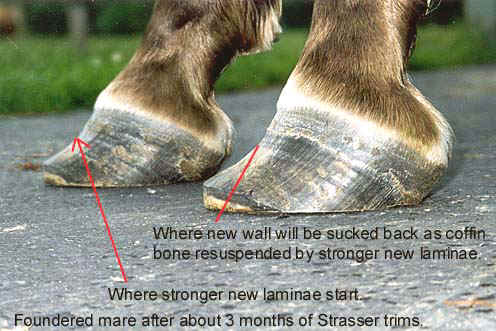
The failures of conventional methods:
I have been hearing of more and more horses not surviving therapies that are primarily pharmaceutical, and involve the heavy use of drugs. The approach I am advocating may not give instant pain relief, but it will result in structural improvements and more complete healing in the long run. It is also one that involves drugs to a minimum. Some of the horses on heavy drug therapy develop ulcers and stop eating and drinking. This is trading one problem for an even worse one. I have been hearing from owners of foundered horses who have their horses on 5 or 6 different drugs simultaneously, and some of these horses quit eating and drinking. I am not sure if it is because of stomach ulcers, or kidney and liver overload, but the results of prolonged and heavy drug use can be devastating, including colic. This is another reason why I feel a barefoot, primarily mechanical approach is both better and safer.
I have heard from people who had additional rotation, and even sole penetration, from heartbars, Thera-Flex pads or the Equine Digit Support System being left on only 8 weeks. The longer it is left on, the worse the results. My horse went from 5-6 degrees' rotation to 11 degrees--in Thera-Flex pads...left on for 3 months due to farriers not showing up. It is easier to maintain frog pressure consistently with a frequent barefoot trim, and it is something a horse owner can do himself. There is a greater margin of safety with a barefoot approach as well. Shoeing support systems with either too little or too much frog pressure can create more problems, and need to be put on by an expert. Too little frog support, and you get additional rotation. Too much, and you get pressure necrosis. Another negative of fixating the frog and foot with a bar shoe is reduced hoof mechanism and circulation.
Dr. Strasser's books are the best books I have found yet on correcting laminitis. While her hoofcare specialist textbook gives by far the most detailed and useful information, it costs more money than most people can afford. Her other books, "A Lifetime of Soundness" and "Shoeing: a Necessary Evil?" are very good introductory works. She has been having remarkable results correcting founder and other lameness problems in her clinic in Tübingen, Germany. These books go into great biomechanical detail about the inner workings of the equine hoof. They make a strong case against using shoes, from many angles. Dr. Strasser maintains that frequent and correct barefoot trims enhance circulation more than any other scenario, and that enhanced circulation and restoring the bottom of the coffin bone to a ground-parallel position are the foundations of healing laminitis...and most other hoof problems as well. She has been correcting severe laminitis in months, not years. The old saw about "Once foundered, always foundered!" is simply not true. I would say, though, that horses who have foundered many, many times over the years will not have as quick a recovery as horses who have only foundered a couple of times, and had it caught early.
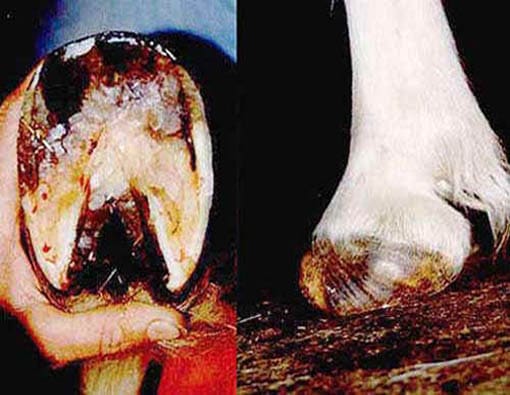
Dr. Strasser trims a severely foundered pony.
Dr. Strasser also mentions that the circulation-reducing effects of horseshoes have a numbing effect. This may explain why my foundered horse seemed more comfortable in shoes, but made no structural progress in getting a more normal hoof while he was shod. Max's white line remained stretched out to 3/4 of an inch wide at the toe for several years while he was being shod, and did not shrink until I began doing my own trimming. The shoeing did make him more comfortable, but he never seemed to make any progress in terms of structural improvements while he was shod. My own experiences confirm her contention that horseshoes are mainly palliative. To get stronger, thicker walls and stronger laminae to grow in, she maintains that enhancing circulation through frequent correct barefoot trims and exercise are the keys to real improvement, and that getting the bottom of the coffin bone ground-parallel is the basis of preventing founder in the future. Although I show many photos of my early trimming, I point out where I made mistakes that slowed our progress.
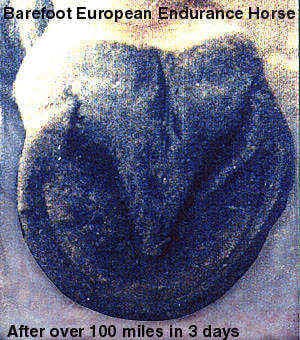
The hoof below shows the end results of correct trimming, enhanced circulation and exercise. It is an illustration from "A Lifetime of Soundness," and shows a European competitive trail horse after completing 110 miles in 3 days, barefoot. This is the ideal! We would like to promote the idea that with enlightened hoofcare and a gradual period of transition, barefootedness can actually be a superior high-performance option. The stallions at the Spanish Riding School perform barefoot, for instance.
Some photo case histories from the files of Dr. Strasser and Sabine Kells!
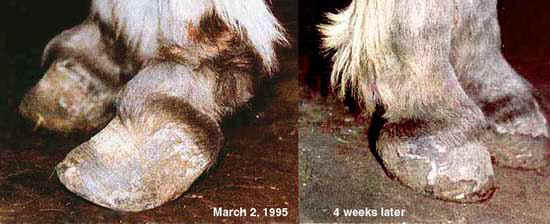
Progress in just 4 weeks at Dr. Strasser's clinic.
(More photos, even worse, of this neglected donkey in the links below.)
Click here for Strasser cases, photos in thumbnail links (for faster download times).
(143 K. Load times: 28.8K, 54 sec.--56k, 36 Sec.--T1, 3.7 Sec.)
Click here for Strasser cases, photos full size (photos full size--better for print-outs)
(993 K. Load times: 28.8K, 6 min.--56K, 4 min.--T1, 9.7 sec.)
For information on the Strasser Hoofcare Specialist Certification course in N. America, contact Sabine Kells
A Trimming Video is available on doing a basic Strasser trim on normal horses, covering many key points. Dr. Strasser demonstrates and comments while trimming in this video, which is quite professionally done. While this does not show trimming a foundered hoof, it is still well worth watching. The video, along with tools, clinic dates and online clinic registration, is available at:
www.strasserhoofcare.org
Books of Interest
To order Jaime Jackson's Books:
(In association with Amazon.com. Online ordering; credit card orders accepted.)
The Natural Horse--Foundations for Natural Horsemanship--Click here
Studies of wild horses and herd life; lessons from the wild applied to trimming, housing, riding, horse handling and hoof care. In this earlier book, he was still afraid to come out and endorse riding without shoes because his other findings might not be "heard" by the farrier community. Wild hoof studies presented are very interesting.

Founder: Prevention and Cure The Natural Way--Click here
Jackson advocates keeping a horse in the environment and on the diet of the wild horses he studied--desert-like conditions, varied but sparse vegetation, rough terrain, etc. For those of us in soft terrain with lush grass, he recommends dry-lotting, which I disagree on; I believe it still can be made to work. Some discussion of trimming, and he warns you about some high-tech shoeing options he does not believe in that are in common use.

Horse Owner's Guide to Natural Hoof Care--Click here
An overview of how Jackson trims.

Paddock Paradise--Click here
Jackson's ideas on how to encourage natural wear and more movement in your pasture.

To order Dr. Strasser's Books:
A Lifetime of Soundness, by Dr. Hiltrud Strasser and Sabine Kells. An overall introduction to the Strasser method of rehabilitation, why keeping the horse as naturally as possible is better than stabling, stall confinement, shoeing, etc. Click here

Shoeing: A Necessary Evil?, by Dr. Hiltrud Strasser and Sabine Kells. Click here Focusing more on what is detrimental about shoeing.

Who's Afraid of Founder? Laminitis Demystified: Causes, Prevention and Holistic Rehabilitation Click here

Navicular No More, Click here Far from being a hopeless condition, often "navicular" can be healed with correct hoof form.

Metal in the Mouth, Click here The adverse effects of using bits are more far-reaching than we might realize.

Barefoot Stories, edited by Yvonne Welz, featuring cases using the Strasser method to rehabilitate horses. Click here

Also Available--
"The Hoofcare Specialist’s Handbook: Hoof Orthopedics and Holistic Lameness Rehabilitation," by Hiltrud Strasser, DVM, and Sabine Kells. Over 800 pages. The textbook for the Strasser hoofcare specialist course. Admittedly very expensive. For ordering info, Click HERE.
To order additional recommended books on lameness:
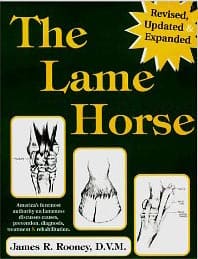
The Lame Horse, by James Rooney, DVM--a classic reference. All types of lameness covered. Cross-sections, diagrams, x-rays, diagnosis, treatment options. Dr. Rooney is pro-barefoot. Click here to order Click here to Preview
Color Atlas of the Horse's Foot, by Christopher C. Pollitt, PhD., MRCVS--remarkable book, numerous dissections, cross-sections, all sorts of lameness and abnormalities shown. Expensive, but worth it! Click here

Vintage farrier books on balancing feet:
High heels were not always the fad they are now!
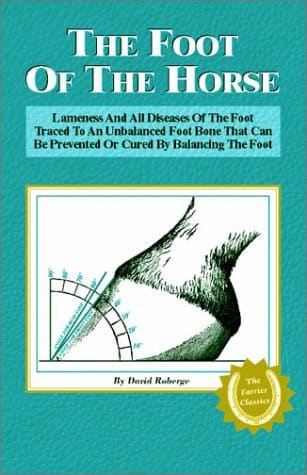
The Foot of the Horse, by David Roberge, reprinted in paperback, which advocated a ground-parallel coffin bone over 100 years ago, even though it also emphasized shoeing. Click here
The Art of Shoeing and Balancing the Trotter, by Charles Arthur McLellan--another vintage book on balancing feet. Click here

The Cavalry Horseshoer's Technical Manual, by US War Dept. (Another vintage farrier manual that did not advocate high heels, or steep toe angles in the fores--Click here
(In association with Amazon.com. Online ordering; credit card orders accepted.)
Strasser-certified hoofcare specialists in N. American, Australia and the UK: (Qualified to trim pathological feet.) http://www.thehorseshoof.com/ (click on 'certified hoofcare' link)
www.strasserhoofcare.org
There are over 50 Strasser-certified hoofcare specialists in Europe. Contact Dr. Strasser for the hoofcare specialist nearest you at Hufklinik@t-online.de
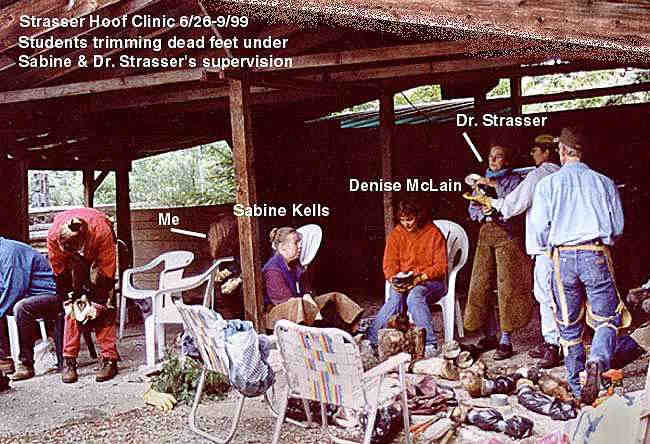
Strasser Clinics in N. America:
Go to: www.strasserhoofcare.org click on "Seminars" and then on "seminar schedule and signup" on the bottom of the "Seminars" page for an updated clinic schedule, registration forms, etc.
Some people are able to see the 2-D drawings and photos on my page and visualize a 3-D shape, but most really can't visualize the trim or know how to actually do it until they get some hands-on instruction. These clinics are a great help for most people.
Please bear in mind that these weekend classes are just an introduction, and not the full course. To become a certified hoofcare specialist, you have to have at least 500 hours of hands-on instruction.
More Clinics and Local Contacts in N. America
These local contacts are provided to help you get some people to network with locally. The training and experience levels vary considerably; some I cannot honestly say are qualified to help you trim a foundered horse, but some are.
www.thehorseshoof.com/friends.html
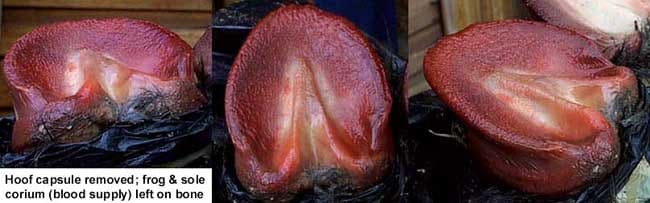
Hoof capsule removed. The trimmed sole should
have a shape that follows this shape. Most people
do not concave out enough on sides and heels.
(Photo courtesy of Jenny Edwards)

La Boot, designed by Dianne Coogias...and Dianne with friends
Sadly, Dianne Coogias, SHP, died of cancer April 29, 2005. Horses and their friends have had a great loss...
Dr. Strasser was twice nominated for the American Farriers Journal International Veterinarian's Hall of Fame; Classes of 2001 and 2002, by W. Robert Cook F.R.C.V.S., PhD., Professor of Surgery Emeritus, Tufts University, School of Veterinary Medicine--drwrcook@aol.com
Click HERE to see the text of Dr. Cook's endorsements in 2001 and 2002
The Horse's Hoof, News for Natural Hoofcare. This is an online subscription newsletter dedicated to the natural hoof and holistic horse care.
The Horse's Hoof WEB SITE takes subscription orders. They have posted many links, contacts and articles of interest on their web site. They also are selling Dr. Strasser's books, and many other authors' books on hoof care. They carry farrier tools, boots, supplements, and other horse care products. (Online orders and credit cards accepted.)
Please send all requests, questions, article submissions and photos to:
Yvonne Welz, P.O. Box 1969, Queen Creek, AZ 85142
Phone: 1-623-935-1823
www.facebook.com/TheHorsesHoof
editor@TheHorsesHoof.com
www.thehorseshoof.com
Share Barefoot success stories on this page!
My contact info:
Send Email to Gretchen Fathauer, or call (740) 674-4492
P. O. Box 307, Duncan Falls, OH 43734, USA
If you want to discuss your horse, please send me photos of your horse's feet. I can't help you as much if I haven't seen what's going on.
Disclaimer: I have not completed the full Strasser hoofcare specialist certification program, and so I cannot officially speak for either Dr. Strasser or Sabine Kells. Further, I am not responsible for poor results when the method is applied piecemeal or the trim done incorrectly. I also do not claim to be a veterinarian. I am a horse owner living in a remote area; I was forced to learn about trimming and foundered horses by my circumstances. I chose to share what I learned on my web site, and have had so many people share their experiences and discoveries with me as a result of this site being out there. I have also continued to study other sources of information.
Click here to subscribe to naturalhorsetrim
(I moderate this listserv to weed out "fluff.")
Copyright by Gretchen Fathauer, 2019. All rights reserved.